
Yemen Population: 28,667,230
«  Previous Country | Next Country Previous Country | Next Country  » » | 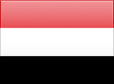 |
| History | |
| The Kingdom of Yemen (colloquially known as North Yemen) became independent from the Ottoman Empire in 1918 and in 1962 became the Yemen Arab Republic. The British, who had set up a protectorate area around the southern port of Aden in the 19th century, withdrew in 1967 from what became the People's Republic of Southern Yemen (colloquially known as South Yemen). Three years later, the southern government adopted a Marxist orientation and changed the country's name to the People's Democratic Republic of Yemen. The massive exodus of hundreds of thousands of Yemenis from the south to the north contributed to two decades of hostility between the states. The two countries were formally unified as the Republic of Yemen in 1990. A southern secessionist movement and brief civil war in 1994 was quickly subdued. In 2000, Saudi Arabia and Yemen agreed to delineate their border. Fighting in the northwest between the government and the Huthis, a Zaydi Shia Muslim minority, continued intermittently from 2004 to 2010, and then again from 2014-present. The southern secessionist movement was revitalized in 2007. Public rallies in Sana'a against then President Ali Abdallah SALIH - inspired by similar demonstrations in Tunisia and Egypt - slowly built momentum starting in late January 2011 fueled by complaints over high unemployment, poor economic conditions, and corruption. By the following month, some protests had resulted in violence, and the demonstrations had spread to other major cities. By March the opposition had hardened its demands and was unifying behind calls for SALIH's immediate ouster. In April 2011, the Gulf Cooperation Council (GCC), in an attempt to mediate the crisis in Yemen, proposed the GGC Initiative, an agreement in which the president would step down in exchange for immunity from prosecution. SALIH's refusal to sign an agreement led to further violence. The UN Security Council passed Resolution 2014 in October 2011 calling for an end to the violence and completing a power transfer deal. In November 2011, SALIH signed the GCC Initiative to step down and to transfer some of his powers to Vice President Abd Rabuh Mansur HADI. Following HADI's uncontested election victory in February 2012, SALIH formally transferred all presidential powers. In accordance with the GCC Initiative, Yemen launched a National Dialogue Conference (NDC) in March 2013 to discuss key constitutional, political, and social issues. HADI concluded the NDC in January 2014 and planned to begin implementing subsequent steps in the transition process, including constitutional drafting, a constitutional referendum, and national elections. The Huthis, perceiving their grievances were not addressed in the NDC, joined forces with SALIH and expanded their influence in northwestern Yemen, culminating in a major offensive against military units and rival tribes and enabling their forces to overrun the capital, Sanaa, in September 2014. In January 2015, the Huthis surrounded the presidential palace, HADI's residence, and key government facilities, prompting HADI and the cabinet to submit their resignations. HADI fled to Aden in February 2015 and rescinded his resignation. He subsequently escaped to Oman and then moved to Saudi Arabia and asked the GCC to intervene militarily in Yemen to protect the legitimate government from the Huthis. In March, Saudi Arabia assembled a coalition of Arab militaries and began airstrikes against the Huthis and Huthi-affiliated forces. Ground fighting between Huthi-aligned forces and resistance groups backed by the Saudi-led coalition continued through 2016. In 2016, the UN brokered a months-long cessation of hostilities that reduced airstrikes and fighting, and initiated peace talks in Kuwait. However, the talks ended without agreement. The Huthis and SALIH’s political party announced a Supreme Political Council in August 2016 and a National Salvation Government, including a prime minister and several dozen cabinet members, in November 2016, to govern in Sanaa and further challenge the legitimacy of HADI’s government. However, amid rising tensions between the Huthis and SALIH, sporadic clashes erupted in mid-2017, and escalated into open fighting that ended when Huthi forces killed SALIH in early December 2017. In 2018, anti-Huthi forces made the most battlefield progress in Yemen since early 2016, most notably in Al Hudaydah Governorate. In December 2018, the Huthis and Yemeni Government participated in the first UN-brokered peace talks since 2016. In April 2019, Yemen’s parliament convened in Seiyoun for the first time since the conflict broke out in 2014 and elected a speaker and vice speakers. |

|  |
| |
| Geography | |
| |
| Location: | Middle East, bordering the Arabian Sea, Gulf of Aden, and Red Sea, between Oman and Saudi Arabia |
| Geographic coordinates: | 15 00 N, 48 00 E |
| Area: | total: 527,968 sq km land: 527,968 sq km water: 0 sq km note: includes Perim, Socotra, the former Yemen Arab Republic (YAR or North Yemen), and the former People's Democratic Republic of Yemen (PDRY or South Yemen) Size comparison: almost four times the size of Alabama; slightly larger than twice the size of Wyoming |
| Land Boundaries: | total: 1,601 km border countries (2): Oman 294 km, Saudi Arabia 1307 km |
| Coastline: | 1,906 km |
| Maritime claims: | territorial sea: 12 nm exclusive economic zone: 200 nm contiguous zone: 24 nm continental shelf: 200 nm or to the edge of the continental margin |
| Climate: | mostly desert; hot and humid along west coast; temperate in western mountains affected by seasonal monsoon; extraordinarily hot, dry, harsh desert in east |
| Terrain: | narrow coastal plain backed by flat-topped hills and rugged mountains; dissected upland desert plains in center slope into the desert interior of the Arabian Peninsula |
| Natural resources: | petroleum, fish, rock salt, marble; small deposits of coal, gold, lead, nickel, and copper; fertile soil in west |
| Land use: | agricultural land: 44.5% (2011 est.) arable land: 2.2% (2011 est.) permanent crops: 0.6% (2011 est.) permanent pasture: 41.7% (2011 est.) forest: 1% (2011 est.) other: 54.5% (2011 est.) |
| Irrigated land: | 6,800 sq km (2012) |
| Natural hazards: | sandstorms and dust storms in summer volcanism: limited volcanic activity; Jebel at Tair (Jabal al-Tair, Jebel Teir, Jabal al-Tayr, Jazirat at-Tair) (244 m), which forms an island in the Red Sea, erupted in 2007 after awakening from dormancy; other historically active volcanoes include Harra of Arhab, Harras of Dhamar, Harra es-Sawad, and Jebel Zubair, although many of these have not erupted in over a century |
| Current Environment Issues: | limited natural freshwater resources; inadequate supplies of potable water; overgrazing; soil erosion; desertification |
| International Environment Agreements: | party to: Biodiversity, Climate Change, Climate Change-Kyoto Protocol, Desertification, Endangered Species, Environmental Modification, Hazardous Wastes, Law of the Sea, Ozone Layer Protection signed, but not ratified: none of the selected agreements |
| ^Back to Top | |
| People | |
| |
| Nationality: | noun: Yemeni(s) adjective: Yemeni |
| Ethnic groups: | predominantly Arab; but also Afro-Arab, South Asian, European |
| Languages: | Arabic (official) note: a distinct Socotri language is widely used on Socotra Island and Archipelago; Mahri is still fairly widely spoken in eastern Yemen |
| Religions: | Muslim 99.1% (official; virtually all are citizens, an estimated 65% are Sunni and 35% are Shia), other 0.9% (includes Jewish, Baha'i, Hindu, and Christian; many are refugees or temporary foreign residents) (2010 est.) |
| Population: | 28,667,230 (July 2018 est.) |
| Age structure: | 0-14 years: 39.16% (male 5,711,709 /female 5,513,526) 15-24 years: 21.26% (male 3,089,817 /female 3,005,693) 25-54 years: 32.78% (male 4,805,059 /female 4,591,811) 55-64 years: 4% (male 523,769 /female 623,100) 65 years and over: 2.8% (male 366,891 /female 435,855) (2018 est.) |
| Dependency ratios: | total dependency ratio: 76.8 (2015 est.) youth dependency ratio: 71.7 (2015 est.) elderly dependency ratio: 5.1 (2015 est.) potential support ratio: 19.8 (2015 est.) |
| Median age: | total: 19.8 years male: 19.6 years female: 19.9 years (2018 est.) |
| Population growth rate: | 2.17% (2018 est.) |
| Birth rate: | 27.6 births/1,000 population (2018 est.) |
| Death rate: | 5.9 deaths/1,000 population (2018 est.) |
| Net migration rate: | 0.1 migrant(s)/1,000 population (2018 est.) |
| Urbanization: | urban population: 36.6% of total population (2018) rate of urbanization: 4.06% annual rate of change (2015-20 est.) |
| Major urban areas - population: | 2.779 million SANAA (capital) 922,000 Aden (2018) |
| Sex ratio: | at birth: 1.05 male(s)/female 0-14 years: 1.04 male(s)/female 15-24 years: 1.03 male(s)/female 25-54 years: 1.05 male(s)/female 55-64 years: 0.84 male(s)/female 65 years and over: 0.84 male(s)/female total population: 1.02 male(s)/female (2018 est.) Mother's mean age at first birth: 21.4 years (2013 est.) median age at first birth among women 25-29 |
| Maternal mortality rate: | 385 deaths/100,000 live births (2015 est.) |
| Infant mortality rate: | total: 44.6 deaths/1,000 live births male: 48.6 deaths/1,000 live births female: 40.4 deaths/1,000 live births (2018 est.) |
| Life expectancy at birth: | total population: 66.2 years male: 64 years female: 68.5 years (2018 est.) |
| Total fertility rate: | 3.48 children born/woman (2018 est.) |
| Contraceptive prevalence rate: | 33.5% (2013) |
| Physicians density: | 0.31 physicians/1,000 population (2014) |
| Hospital bed density: | 0.7 beds/1,000 population (2014) |
| Drinking water source: | improved: urban: 72% of population rural: 46.5% of population total: 54.9% of population unimproved: urban: 28% of population rural: 53.5% of population total: 45.1% of population (2012 est.) |
| Sanitation facility access: | improved: urban: 92.5% of population (2012 est.) rural: 34.1% of population (2012 est.) total: 53.3% of population (2012 est.) unimproved: urban: 7.5% of population (2012 est.) rural: 65.9% of population (2012 est.) total: 46.7% of population (2012 est.) |
| HIV/AIDS - adult prevalence rate: | <.1% (2016 est.) |
| HIV/AIDS - people living with HIV/AIDS: | 9,900 (2016 est.) |
| HIV/AIDS - deaths: | <500 (2016 est.) |
| Obesity - adult prevalence rate: | 17.1% (2016) |
| Children under the age of 5 years underweight: | 39.9% (2013) |
| Education expenditures: | n/a |
| Literacy: | definition: age 15 and over can read and write (2015 est.) total population: 70.1% male: 85.1% female: 55% (2015 est.) |
| School life expectancy (primary to tertiary education): | total: 9 years male: 10 years female: 8 years (2011) Unemployment, youth ages 15-24: total: 24.5% male: 23.5% female: 34.6% (2014 est.) |
| ^Back to Top | |
| Government | |
| |
| Country name: | conventional long form: Republic of Yemen conventional short form: Yemen local long form: Al Jumhuriyah al Yamaniyah local short form: Al Yaman former: Yemen Arab Republic [Yemen (Sanaa) or North Yemen] and People's Democratic Republic of Yemen [Yemen (Aden) or South Yemen] etymology: name derivation remains unclear but may come from the Arab term "yumn" (happiness) and be related to the region's classical name "Arabia Felix" (Fertile or Happy Arabia); the Romans referred to the rest of the peninsula as "Arabia Deserta" (Deserted Arabia) |
| Government type: | in transition |
| Capital: | name: Sanaa geographic coordinates: 15 21 N, 44 12 E time difference: UTC+3 (8 hours ahead of Washington, DC, during Standard Time) |
| Administrative divisions: | 22 governorates (muhafazat, singular - muhafazah); Abyan, 'Adan (Aden), Ad Dali', Al Bayda', Al Hudaydah, Al Jawf, Al Mahrah, Al Mahwit, Amanat al 'Asimah (Sanaa City), 'Amran, Arkhabil Suqutra (Socotra Archipelago), Dhamar, Hadramawt, Hajjah, Ibb, Lahij, Ma'rib, Raymah, Sa'dah, San'a' (Sanaa), Shabwah, Ta'izz |
| Independence: | 22 May 1990 (Republic of Yemen was established with the merger of the Yemen Arab Republic [Yemen (Sanaa) or North Yemen] and the Marxist-dominated People's Democratic Republic of Yemen [Yemen (Aden) or South Yemen]); notable earlier dates: North Yemen became independent on 1 November 1918 (from the Ottoman Empire) and became a republic with the overthrow of the theocratic Imamate on 27 September 1962; South Yemen became independent on 30 November 1967 (from the UK) |
| National holiday: | Unification Day, 22 May (1990) |
| Constitution: | adopted by referendum 16 May 1991 (following unification); amended several times, last in 2009; note - after the National Dialogue ended in January 2015, a presidentially appointed Constitutional Drafting Committee worked to prepare a new draft constitution that was expected to be put to a national referendum before being adopted; however, the president’s resignation in January 2015 and subsequent conflict have interrupted the process |
| Legal system: | mixed legal system of Islamic law, Napoleonic law, English common law, and customary law |
| Suffrage: | 18 years of age; universal |
| Executive branch: | chief of state: President Abd Rabuh Mansur HADI (since 21 February 2012); Vice President ALI MUHSIN al-Ahmar, Lt. Gen. (since 3 April 2016) head of government: Prime Minister Maeen Abd al-Malik SAEED (since 15 October 2018) cabinet: appointed by the president elections/appointments: president directly elected by absolute majority popular vote in 2 rounds if needed for a 7-year term (eligible for a second term); election last held on 21 February 2012 (next election NA); note - a special election was held on 21 February 2012 to remove Ali Abdallah SALIH under the terms of a Gulf Cooperation Council-mediated deal during the political crisis of 2011; vice president appointed by the president; prime minister appointed by the president election results: Abd Rabuh Mansur HADI (GPC) elected as a consensus president with about 50% popular participation; no other candidates |
| Legislative branch: | description: bicameral Parliament or Majlis consists of: Shura Council or Majlis Alshoora (111 seats; members appointed by the president; member tenure NA) House of Representatives or Majlis al Nuwaab (301 seats; members directly elected in single-seat constituencies by simple majority vote to serve 6-year terms) elections: House of Representatives - last held on 27 April 2003 (next scheduled for April 2009 but postponed indefinitely) election results: percent of vote by party - GPC 58.0%, Islah 22.6%, YSP 3.8%, Unionist Party 1.9%, other 13.7%; seats by party - GPC 238, Islah 46, YSP 8, Nasserist Unionist Party 3, National Arab Socialist Ba'ath Party 2, independent 4 |
| Judicial branch: | highest courts: Supreme Court (consists of the president of the Court, 2 deputies, and nearly 50 judges; court organized into constitutional, civil, commercial, family, administrative, criminal, military, and appeals scrutiny divisions) judge selection and term of office: judges appointed by the Supreme Judicial Council, which is chaired by the president of the republic and includes 10 high-ranking judicial officers; judges serve for life with mandatory retirement at age 65 subordinate courts: appeal courts; district or first instance courts; commercial courts |
| Political parties and leaders: | General People’s Congress or GPC – Aden General People's Congress or GPC - Sana'a [Sadiq Ameen Abu RAS] National Arab Socialist Ba'ath Party [Qassem Salam SAID] Nasserist Unionist People's Organization [Abdulmalik al-MEKHLAFI] Southern Transitional Council or STC [Aidarus al-ZOUBAIDA] Yemeni Reform Grouping or Islah [Muhammed Abdallah al-YADUMI] Yemeni Socialist Party or YSP [Dr. Abd al-Rahman Umar al-SAQQAF] |
| International organization participation: | AFESD, AMF, CAEU, CD, EITI (temporarily suspended), FAO, G-77, IAEA, IBRD, ICAO, ICRM, IDA, IDB, IFAD, IFC, IFRCS, ILO, IMF, IMO, IMSO, Interpol, IOC, IOM, IPU, ISO, ITSO, ITU, ITUC (NGOs), LAS, MIGA, MINURSO, MINUSMA, MONUSCO, NAM, OAS (observer), OIC, OPCW, UN, UNAMID, UNCTAD, UNESCO, UNHCR, UNIDO, UNISFA, UNMIL, UNMIS, UNOCI, UNWTO, UPU, WCO, WFTU (NGOs), WHO, WIPO, WMO, WTO |
| National symbol(s): | golden eagle; national colors: red, white, black |
| National anthem: | name: "al-qumhuriyatu l-muttahida" (United Republic) lyrics/music: Abdullah Abdulwahab NOA'MAN/Ayyoab Tarish ABSI note: adopted 1990; the music first served as the anthem for South Yemen before unification with North Yemen in 1990 |
| Diplomatic representation in the US: | chief of mission: Ambassador Ahmad Awadh BIN MUBARAK (since 3 August 2015) chancery: 2319 Wyoming Avenue NW, Washington, DC 20008 telephone: [1] (202) 965-4760 FAX: [1] (202) 337-2017 |
| Diplomatic representation from the US: | chief of mission: Ambassador Matthew H. TUELLER (since 10 June 2014) embassy: Sa'awan Street, Sanaa; note - Embassy closed in March 2015; Yemen Affairs Unit currently operates out of U.S. Embassy Riyadh mailing address: U.S. Embassy Riyadh telephone: Suspended Operations [966] 11-488-3800 (Embassy Riyadh) FAX: Suspended Operations [966] 11-488-7360 (Embassy Riyadh) |
| ^Back to Top | |
| Economy | |
Yemen is a low-income country that faces difficult long-term challenges to stabilizing and growing its economy, and the current conflict has only exacerbated those issues. The ongoing war has halted Yemen’s exports, pressured the currency’s exchange rate, accelerated inflation, severely limited food and fuel imports, and caused widespread damage to infrastructure. The conflict has also created a severe humanitarian crisis - the world’s largest cholera outbreak currently at nearly 1 million cases, more than 7 million people at risk of famine, and more than 80% of the population in need of humanitarian assistance. Prior to the start of the conflict in 2014, Yemen was highly dependent on declining oil and gas resources for revenue. Oil and gas earnings accounted for roughly 25% of GDP and 65% of government revenue. The Yemeni Government regularly faced annual budget shortfalls and tried to diversify the Yemeni economy through a reform program designed to bolster non-oil sectors of the economy and foreign investment. In July 2014, the government continued reform efforts by eliminating some fuel subsidies and in August 2014, the IMF approved a three-year, $570 million Extended Credit Facility for Yemen. However, the conflict that began in 2014 stalled these reform efforts and ongoing fighting continues to accelerate the country’s economic decline. In September 2016, President HADI announced the move of the main branch of Central Bank of Yemen from Sanaa to Aden where his government could exert greater control over the central bank’s dwindling resources. Regardless of which group controls the main branch, the central bank system is struggling to function. Yemen’s Central Bank’s foreign reserves, which stood at roughly $5.2 billion prior to the conflict, have declined to negligible amounts. The Central Bank can no longer fully support imports of critical goods or the country’s exchange rate. The country also is facing a growing liquidity crisis and rising inflation. The private sector is hemorrhaging, with almost all businesses making substantial layoffs. Access to food and other critical commodities such as medical equipment is limited across the country due to security issues on the ground. The Social Welfare Fund, a cash transfer program for Yemen’s neediest, is no longer operational and has not made any disbursements since late 2014. Yemen will require significant international assistance during and after the protracted conflict to stabilize its economy. Long-term challenges include a high population growth rate, high unemployment, declining water resources, and severe food scarcity. | |
| GDP (purchasing power parity): | $73.63 billion (2017 est.) $78.28 billion (2016 est.) $90.63 billion (2015 est.) note: data are in 2017 dollars |
| GDP (official exchange rate): | $31.27 billion (2017 est.) |
| GDP - real growth rate: | -5.9% (2017 est.) -13.6% (2016 est.) -16.7% (2015 est.) |
| GDP - per capita (PPP): | $2,500 (2017 est.) $2,700 (2016 est.) $3,200 (2015 est.) note: data are in 2017 dollars |
| Gross national saving: | -1.9% of GDP (2017 est.) -3.7% of GDP (2016 est.) -4.5% of GDP (2015 est.) GDP - composition, by end use: household consumption: 116.6% (2017 est.) government consumption: 17.6% (2017 est.) investment in fixed capital: 2.2% (2017 est.) investment in inventories: 0% (2017 est.) exports of goods and services: 7.5% (2017 est.) imports of goods and services: -43.9% (2017 est.) GDP - composition, by sector of origin: agriculture: 20.3% (2017 est.) industry: 11.8% (2017 est.) services: 67.9% (2017 est.) |
| Agriculture - products: | grain, fruits, vegetables, pulses, qat, coffee, cotton; dairy products, livestock (sheep, goats, cattle, camels), poultry; fish |
| Industries: | crude oil production and petroleum refining; small-scale production of cotton textiles, leather goods; food processing; handicrafts; aluminum products; cement; commercial ship repair; natural gas production |
| Industrial production growth rate: | 8.9% (2017 est.) |
| Labor force: | 7.425 million (2017 est.) |
| Labor force - by occupation: | note: most people are employed in agriculture and herding; services, construction, industry, and commerce account for less than one-fourth of the labor force |
| Unemployment rate: | 27% (2014 est.) 35% (2003 est.) |
| Population below poverty line: | 54% (2014 est.) |
| Household income or consumption by percentage share: | lowest 10%: 2.6% highest 10%: 30.3% (2008 est.) |
| Distribution of family income - Gini index: | 37.9 (2009 est.) 37.3 (1999 est.) |
| Budget: | revenues: 2.821 billion (2017 est.) expenditures: 4.458 billion (2017 est.) |
| Taxes and other revenues: | 9% (of GDP) (2017 est.) Budget surplus (+) or deficit (-): -5.2% (of GDP) (2017 est.) |
| Public debt: | 74.5% of GDP (2017 est.) 68.1% of GDP (2016 est.) |
| Fiscal year: | calendar year |
| Inflation rate (consumer prices): | 24.7% (2017 est.) -12.6% (2016 est.) |
| Current account balance: | -$1.236 billion (2017 est.) -$1.868 billion (2016 est.) |
| Exports: | $384.5 million (2017 est.) $940 million (2016 est.) |
| Exports - commodities: | crude oil, coffee, dried and salted fish, liquefied natural gas |
| Exports - partners: | Egypt 29.4%, Thailand 16.7%, Belarus 13.5%, Oman 10.5%, UAE 6.5%, Saudi Arabia 5% (2017) |
| Imports: | $4.079 billion (2017 est.) $3.117 billion (2016 est.) |
| Imports - commodities: | food and live animals, machinery and equipment, chemicals |
| Imports - partners: | UAE 12.2%, China 12.1%, Turkey 8.7%, Brazil 7.3%, Saudi Arabia 6.5%, Argentina 5.5%, India 4.7% (2017) |
| Reserves of foreign exchange and gold: | $245.4 million (31 December 2017 est.) $592.6 million (31 December 2016 est.) |
| Debt - external: | $7.068 billion (31 December 2017 est.) $7.181 billion (31 December 2016 est.) |
| Stock of direct foreign investment - at home: | n/a |
| Market value of publicly traded shares: | n/a |
| Exchange rates: | Yemeni rials (YER) per US dollar - 275 (2017 est.) 214.9 (2016 est.) 214.9 (2015 est.) 228 (2014 est.) 214.89 (2013 est.) |
| ^Back to Top | |
| Energy | |
| |
| Electricity - production: | 4.784 billion kWh (2016 est.) |
| Electricity - consumption: | 3.681 billion kWh (2016 est.) |
| Electricity - exports: | 0 kWh (2016 est.) |
| Electricity - imports: | 0 kWh (2016 est.) |
| Electricity - installed generating capacity: | 1.819 million kW (2016 est.) |
| Electricity - from fossil fuels: | 79% of total installed capacity (2016 est.) |
| Electricity - from nuclear fuels: | 0% of total installed capacity (2017 est.) |
| Electricity - from hydroelectric plants: | 0% of total installed capacity (2017 est.) |
| Electricity - from other renewable sources: | 21% of total installed capacity (2017 est.) |
| Crude oil - production: | 12,260 bbl/day (2017 est.) |
| Crude oil - exports: | 8,990 bbl/day (2015 est.) |
| Crude oil - imports: | 0 bbl/day (2015 est.) |
| Crude oil - proved reserves: | 3 billion bbl (1 January 2018 est.) |
| Refined petroleum products - production: | 20,180 bbl/day (2015 est.) |
| Refined petroleum products - consumption: | 104,000 bbl/day (2016 est.) |
| Refined petroleum products - exports: | 12,670 bbl/day (2015 est.) |
| Refined petroleum products - imports: | 75,940 bbl/day (2015 est.) |
| Natural gas - production: | 481.4 million cu m (2017 est.) |
| Natural gas - consumption: | 481.4 million cu m (2017 est.) |
| Natural gas - exports: | 0 cu m (2017 est.) |
| Natural gas - imports: | 0 cu m (2017 est.) |
| Natural gas - proved reserves: | 478.5 billion cu m (1 January 2018 est.) |
| Carbon dioxide emissions from consumption of energy: | 13.68 million Mt (2017 est.) |
| ^Back to Top | |
| Communications | |
| |
| Cellular Phones in use: | total subscriptions: 16,433,055 subscriptions per 100 inhabitants: 59 (July 2016 est.) |
| Telephone system: | general assessment: due to 75% of population needing humanitarian assistance, and given the civil conflict, telecommunications services are vital but disrupted; mobile towers are often deliberately targeted; maintenance is dangerous to staff; aid organization rely on satellite and radio communications; scarcity of telecommunications equipment in rural areas (2018) domestic: the national network consists of microwave radio relay, cable, tropospheric scatter, GSM and CDMA mobile-cellular telephone systems; fixed-line teledensity remains low by regional standards at 4 per 100 but mobile cellular use expanding at 59 per 100 (2018) international: country code - 967; landing point for the international submarine cable Fiber-Optic Link Around the Globe (FLAG); satellite earth stations - 3 Intelsat (2 Indian Ocean and 1 Atlantic Ocean), 1 Intersputnik (Atlantic Ocean region), and 2 Arabsat; microwave radio relay to Saudi Arabia and Djibouti |
| Broadcast media: | state-run TV with 2 stations; state-run radio with 2 national radio stations and 5 local stations; stations from Oman and Saudi Arabia can be accessed |
| Internet country code: | .ye |
| Internet users: | total: 6,732,928 percent of population: 24.6% (July 2016 est.) |
| ^Back to Top | |
| Transportation | |
| |
| Airports: | 57 (2013) |
| Airports (paved runways): | total 17 (2013) over 3,047 m: 4 (2013) 2,438 to 3,047 m: 9 (2013) 1,524 to 2,437 m: 3 (2013) 914 to 1,523 m: 1 (2013) |
| Airports (unpaved runways): | total 40 (2013) over 3,047 m: 3 (2013) 2,438 to 3,047 m: 5 (2013) 1,524 to 2,437 m: 7 (2013) 914 to 1,523 m: 16 (2013) under 914 m: 9 (2013) |
| Pipelines: | 641 km gas, 22 km liquid petroleum gas, 1370 km oil (2013) |
| Roadways: | total 71,300 km (2005) paved: 6,200 km (2005) unpaved: 65,100 km (2005) |
| Merchant marine: | total 31 by type: general cargo 3, oil tanker 4, other 24 (2018) |
| Ports and terminals: | major seaport(s): Aden, Al Hudaydah, Al Mukalla |
| ^Back to Top | |
| Military | |
| |
| Military branches: | Land Forces (includes seven Military Regional Commands, supported by Strategic Reserve Units), Naval and Coastal Defense Forces (includes Navy Infantry or Marine units and Coast Guard), Air and Air Defense Force (although it still exists in name, in practice many of the officers and soldiers in this branch have been distributed to other military branches and jobs), Border Guards, Strategic Reserve Forces (supports the Land Forces at the discretion of the Armed Forces Commander-in-Chief and also includes a Missile Group, Presidential Protection Brigades, and Special Operations Forces), Minister of Defense Intelligence Authority (consists of the Department of Military Intelligence [active], Department of Reconnaissance [active], Department of Military Security [inactive], and the Electronic Warfare Department [inactive]) (March 2018) |
| Military service age and obligation: | 18 is the legal minimum age for voluntary military service; no conscription; 2-year service obligation (2018) |
| Military expenditures: | 5.04% of GDP (2014) 4.75% of GDP (2013) 4.05% of GDP (2012) 5.19% of GDP (2011) note - no reliable information exists following the start of renewed conflict in 2015 |
| ^Back to Top | |
| Transnational Issues | |
| |
| Disputes - International: | Saudi Arabia has reinforced its concrete-filled security barrier along sections of the fully demarcated border with Yemen to stem illegal cross-border activities |
| Refugees and internally displaced persons: | refugees (country of origin): 250,500 (Somalia), 14,164 (Ethiopia) (2019) IDPs: 3,647,250 (conflict in Sa'ada Governorate; clashes between al-Qa'ida in the Arabian Peninsula and government forces) (2019) |
| ^Back to Top | |
«
Previous Country | Next Country »
Source: CIA - The World Factbook