
 Niue
Niue


Niue Population: 1,618
«  Previous Country | Next Country Previous Country | Next Country  » » | 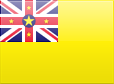 |
| History | |
| Niue's remoteness, as well as cultural and linguistic differences between its Polynesian inhabitants and those of the adjacent Cook Islands, has caused it to be separately administered by New Zealand. The population of the island has trended downwards over recent decades (from a peak of 5,200 in 1966 to 1,618 in 2017) with substantial emigration to New Zealand 2,400 km to the southwest. |

|  |
| |
| Geography | |
| |
| Location: | Oceania, island in the South Pacific Ocean, east of Tonga |
| Geographic coordinates: | 19 02 S, 169 52 W |
| Area: | total: 260 sq km land: 260 sq km water: 0 sq km Size comparison: 1.5 times the size of Washington, DC |
| Land Boundaries: | 0 km |
| Coastline: | 64 km |
| Maritime claims: | territorial sea: 12 nm exclusive economic zone: 200 nm |
| Climate: | tropical; modified by southeast trade winds |
| Terrain: | steep limestone cliffs along coast, central plateau |
| Natural resources: | arable land, fish |
| Land use: | agricultural land: 19.1% (2011 est.) arable land: 3.8% (2011 est.) permanent crops: 11.5% (2011 est.) permanent pasture: 3.8% (2011 est.) forest: 71.2% (2011 est.) other: 9.7% (2011 est.) |
| Irrigated land: | 0 sq km (2012) |
| Natural hazards: | tropical cyclones |
| Current Environment Issues: | increasing attention to conservationist practices to counter loss of soil fertility from traditional slash and burn agriculture |
| International Environment Agreements: | party to: Biodiversity, Climate Change, Climate Change-Kyoto Protocol, Desertification, Law of the Sea, Ozone Layer Protection |
| ^Back to Top | |
| People | |
| |
| Nationality: | noun: Niuean(s) adjective: Niuean |
| Ethnic groups: | Niuean 66.5%, part-Niuean 13.4%, non-Niuean 20.1% (includes 12% European and Asian and 8% other Pacific Islanders) (2011 est.) |
| Languages: | Niuean (official) 46% (a Polynesian language closely related to Tongan and Samoan), Niuean and English 32%, English (official) 11%, Niuean and others 5%, other 6% (2011 est.) |
| Religions: | Ekalesia Niue (Congregational Christian Church of Niue - a Protestant church founded by missionaries from the London Missionary Society) 67%, other Protestant 3% (includes Seventh Day Adventist 1%, Presbyterian 1%, and Methodist 1%), Mormon 10%, Roman Catholic 10%, Jehovah's Witnesses 2%, other 6%, none 2% (2011 est.) |
| Population: | 1,618 (July 2017 est.) note: because of the island's limited economic and educational opportunities, Niueans have emigrated for decades - primarily to New Zealand, but also to Australia and other Pacific island states; Niue's population peaked in 1966 at 5,194, but by 2005 had fallen to 1,508; since then it has rebounded slightly; as of 2013, 23,883 people of Niuean ancestry lived in New Zealand - with more than 20% Niue-born; this means that there are about 15 times as many persons of Niuean living in New Zealand as in Niue, possibly the most eccentric population distribution in the world |
| Population growth rate: | -0.03% (2014 est.) |
| Urbanization: | urban population: 44.8% of total population (2018) rate of urbanization: 1.69% annual rate of change (2015-20 est.) |
| Major urban areas - population: | 1,000 ALOFI (capital) (2018) |
| Sex ratio: | NA |
| Infant mortality rate: | total: n/a male: n/a female: n/a |
| Life expectancy at birth: | total population: n/a male: n/a female: n/a (2017 est.) |
| Total fertility rate: | n/a |
| Drinking water source: | improved: urban: 98.4% of population rural: 98.6% of population total: 98.5% of population unimproved: urban: 1.6% of population rural: 1.4% of population total: 1.5% of population (2015 est.) |
| Sanitation facility access: | improved: urban: 100% of population (2015 est.) rural: 100% of population (2015 est.) total: 100% of population (2015 est.) unimproved: urban: 0% of population (2015 est.) rural: 0% of population (2015 est.) total: 0% of population (2015 est.) |
| HIV/AIDS - adult prevalence rate: | n/a |
| HIV/AIDS - people living with HIV/AIDS: | n/a |
| HIV/AIDS - deaths: | n/a |
| Obesity - adult prevalence rate: | 50% (2016) |
| Education expenditures: | n/a |
| Literacy: | |
| ^Back to Top | |
| Government | |
| |
| Country name: | conventional long form: none conventional short form: Niue former: Savage Island etymology: the origin of the name is obscure; in Niuean, the word supposedly translates as "behold the coconut" note: pronunciation falls between nyu-way and new-way, but not like new-wee |
| Government type: | self-governing parliamentary democracy (Fouo Ekepule) in free association with New Zealand |
| Capital: | name: Alofi geographic coordinates: 19 01 S, 169 55 W time difference: UTC-11 (6 hours behind Washington, DC, during Standard Time) |
| Administrative divisions: | none; note - there are no first-order administrative divisions as defined by the US Government, but there are 14 villages at the second order |
| Independence: | 19 October 1974 (Niue became a self-governing state in free association with New Zealand) |
| National holiday: | Waitangi Day (Treaty of Waitangi established British sovereignty over New Zealand), 6 February (1840) |
| Constitution: | history: several previous (New Zealand colonial statutes); latest 19 October 1974 (Niue Constitution Act 1974) amendments: proposed by the Assembly; passage requires at least two-thirds majority vote of the Assembly membership in each of three readings and approval by the majority of votes in a referendum; passage of amendments to a number of sections including Niue’s self-governing status, British nationality and New Zealand citizenship, external affairs and defense, economic and administrative assistance by New Zealand, and amendment procedures requires at least two-thirds majority vote by the Assembly and at least two-thirds of votes in a referendum; amended 1992, 2007 (2017) |
| Legal system: | English common law |
| Suffrage: | 18 years of age; universal |
| Executive branch: | chief of state: Queen ELIZABETH II (since 6 February 1952); represented by Governor-General of New Zealand Dame Patricia Lee REDDY (since 28 September 2016); the UK and New Zealand are represented by New Zealand High Commissioner Kirk YATES (since May 2018) head of government: Premier Sir Toke TALAGI (since 18 June 2008) cabinet: Cabinet chosen by the premier elections/appointments: the monarchy is hereditary; premier indirectly elected by the Legislative Assembly for a 3-year term; election last held on 12 May 2017 (next to be held in 2020) election results: Toke TALAGI reelected premier; Legislative Assembly vote - Toke TALAGI (independent) 15, O'Love JACOBSEN (independent) 5 |
| Legislative branch: | description: unicameral Assembly or Fono Ekepule (20 seats; 14 members directly elected in single-seat constituencies by simple majority vote and 6 directly elected from the National Register or "common roll" by majority vote; members serve 3-year terms) elections: last held on 6 May 2017 (next to be held in 2020) election results: percent of vote by party - NA; seats by party - independent 20; composition - men 15, women 5, percent of women 25% |
| Judicial branch: | highest courts: Court of Appeal (consists of the chief justice and up to 3 judges); note - the Judicial Committee of the Privy Council (in London) is the final appeal court beyond the Niue Court of Appeal judge selection and term of office: Niue chief justice appointed by the governor general on the advice of the Cabinet and tendered by the premier; other judges appointed by the governor-general on the advice of the Cabinet and tendered by the chief justice and the minister of justice; judges serve until age 68 subordinate courts: High Court note: Niue is a participant in the Pacific Judicial Development Program, which is designed to build governance and the rule of law in 15 Pacific island countries |
| Political parties and leaders: | Alliance of Independents or AI Niue People's Action Party or NPP [Young VIVIAN] |
| International organization participation: | ACP, AOSIS, FAO, IFAD, OPCW, PIF, Sparteca, SPC, UNESCO, UPU, WHO, WIPO, WMO |
| National symbol(s): | yellow, five-pointed star; national color: yellow |
| National anthem: | name: "Ko e Iki he Lagi" (The Lord in Heaven) lyrics/music: unknown/unknown, prepared by Sioeli FUSIKATA note: adopted 1974 |
| Diplomatic representation in the US: | none (self-governing territory in free association with New Zealand) |
| Diplomatic representation from the US: | none (self-governing territory in free association with New Zealand) |
| ^Back to Top | |
| Economy | |
The economy suffers from the typical Pacific island problems of geographic isolation, few resources, and a small population. The agricultural sector consists mainly of subsistence gardening, although some cash crops are grown for export. Industry consists primarily of small factories for processing passion fruit, lime oil, honey, and coconut cream. The sale of postage stamps to foreign collectors is an important source of revenue. Government expenditures regularly exceed revenues, and the shortfall is made up by critically needed grants from New Zealand that are used to pay wages to public employees. Economic aid allocation from New Zealand in FY13/14 was US$10.1 million. Niue has cut government expenditures by reducing the public service by almost half. The island in recent years has suffered a serious loss of population because of emigration to New Zealand. Efforts to increase GDP include the promotion of tourism and financial services, although the International Banking Repeal Act of 2002 resulted in the termination of all offshore banking licenses. | |
| GDP (purchasing power parity): | $10.01 million (2003 est.) |
| GDP (official exchange rate): | $10.01 million (2003) (2003) |
| GDP - real growth rate: | 6.2% (2003 est.) |
| GDP - per capita (PPP): | $5,800 (2003 est.) GDP - composition, by sector of origin: agriculture: 23.5% (2003) industry: 26.9% (2003) services: 49.5% (2003) |
| Agriculture - products: | coconuts, passion fruit, honey, limes, taro, yams, cassava (manioc, tapioca), sweet potatoes; pigs, poultry, beef cattle |
| Industries: | handicrafts, food processing |
| Industrial production growth rate: | n/a |
| Labor force: | 663 (2001) |
| Labor force - by occupation: | note: most work on family plantations; paid work exists only in government service, small industry, and the Niue Development Board |
| Unemployment rate: | 12% (2001) |
| Population below poverty line: | n/a |
| Household income or consumption by percentage share: | lowest 10%: n/a highest 10%: n/a |
| Budget: | revenues: 15.07 million (FY04/05) expenditures: 16.33 million (FY04/05) Budget surplus (+) or deficit (-): -12.6% (of GDP) (FY04/05) |
| Fiscal year: | 1 April - 31 March |
| Inflation rate (consumer prices): | 4% (2005) |
| Exports: | $201,400 (2004 est.) |
| Exports - commodities: | canned coconut cream, copra, honey, vanilla, passion fruit products, pawpaws, root crops, limes, footballs, stamps, handicrafts |
| Imports: | $9.038 million (2004 est.) |
| Imports - commodities: | food, live animals, manufactured goods, machinery, fuels, lubricants, chemicals, drugs |
| Debt - external: | $418,000 (2002 est.) |
| Exchange rates: | New Zealand dollars (NZD) per US dollar - 1.416 (2017 est.) 1.4279 (2016 est.) 1.4279 (2015) 1.4279 (2014 est.) 1.2039 (2013 est.) |
| ^Back to Top | |
| Energy | |
| |
| Electricity - production: | 3 million kWh (2016 est.) |
| Electricity - consumption: | 2.79 million kWh (2016 est.) |
| Electricity - exports: | 0 kWh (2016 est.) |
| Electricity - imports: | 0 kWh (2016 est.) |
| Electricity - installed generating capacity: | 2,300 kW (2016 est.) |
| Electricity - from fossil fuels: | 87% of total installed capacity (2016 est.) |
| Electricity - from nuclear fuels: | 0% of total installed capacity (2017 est.) |
| Electricity - from hydroelectric plants: | 0% of total installed capacity (2017 est.) |
| Electricity - from other renewable sources: | 13% of total installed capacity (2017 est.) |
| Crude oil - production: | 0 bbl/day (2017 est.) |
| Crude oil - exports: | 0 bbl/day (2015 est.) |
| Crude oil - imports: | 0 bbl/day (2015 est.) |
| Crude oil - proved reserves: | 0 bbl (1 January 2018 est.) |
| Refined petroleum products - production: | 0 bbl/day (2017 est.) |
| Refined petroleum products - consumption: | 50 bbl/day (2016 est.) |
| Refined petroleum products - exports: | 0 bbl/day (2015 est.) |
| Refined petroleum products - imports: | 54 bbl/day (2015 est.) |
| Natural gas - production: | 0 cu m (2017 est.) |
| Natural gas - consumption: | 0 cu m (2017 est.) |
| Natural gas - exports: | 0 cu m (2017 est.) |
| Natural gas - imports: | 0 cu m (2017 est.) |
| Natural gas - proved reserves: | 0 cu m (1 January 2014 est.) |
| Carbon dioxide emissions from consumption of energy: | 7,252 Mt (2017 est.) |
| ^Back to Top | |
| Communications | |
| |
| Telephone system: | general assessment: sole provider services for over 1000 landlines and fixed wireless lines; cellular telephone service operates on AMPS and GSM platforms; difficult geography presents challenges for rural areas (2018) domestic: single-line (fixed line) telephone system connects all villages (and virtually all households) on island (2018) international: country code - 683 (2015) |
| Broadcast media: | 1 government-owned TV station with many of the programs supplied by Television New Zealand; 1 government-owned radio station broadcasting in AM and FM (2019) |
| Internet country code: | .nu |
| Internet users: | total: 1,090 percent of population: 91.6% (July 2016 est.) |
| ^Back to Top | |
| Transportation | |
| |
| Airports: | 1 (2013) |
| Airports (paved runways): | total 1 (2017) 1,524 to 2,437 m: 1 (2017) |
| Airports (unpaved runways): | total 1 (2013) 1,524 to 2,437 m: 1 (2013) |
| Roadways: | total 234 km (2017) paved: 210 km (2017) unpaved: 24 km |
| Ports and terminals: | major seaport(s): Alofi |
| ^Back to Top | |
| Military | |
| |
| Defense is the responsibility of New Zealand | |
| Military branches: | no regular indigenous military forces; Police Force |
| ^Back to Top | |
| Transnational Issues | |
| |
| Disputes - International: | none |
| ^Back to Top | |
Niue Previous Country | Next Country »
Source: CIA - The World Factbook