
Jamaica Population: 2,812,090
NO VISITORS FROM HERE YET!Back to Flag Counter Overview | 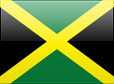 |
| History | |
| The island - discovered by Christopher COLUMBUS in 1494 - was settled by the Spanish early in the 16th century. The native Taino, who had inhabited Jamaica for centuries, were gradually exterminated and replaced by African slaves. England seized the island in 1655 and established a plantation economy based on sugar, cocoa, and coffee. The abolition of slavery in 1834 freed a quarter million slaves, many of whom became small farmers. Jamaica gradually increased its independence from Britain. In 1958 it joined other British Caribbean colonies in forming the Federation of the West Indies. Jamaica withdrew from the Federation in 1961 and gained full independence in 1962. Deteriorating economic conditions during the 1970s led to recurrent violence as rival gangs affiliated with the major political parties evolved into powerful organized crime networks involved in international drug smuggling and money laundering. Violent crime, drug trafficking, and poverty pose significant challenges to the government today. Nonetheless, many rural and resort areas remain relatively safe and contribute substantially to the economy. |

|  |
| |
| Geography | |
| |
| Location: | Caribbean, island in the Caribbean Sea, south of Cuba |
| Geographic coordinates: | 18 15 N, 77 30 W |
| Area: | total: 10,991 sq km land: 10,831 sq km water: 160 sq km Size comparison: about half the size of New Jersey; slightly smaller than Connecticut |
| Land Boundaries: | 0 km |
| Coastline: | 1,022 km |
| Maritime claims: | territorial sea: 12 nm exclusive economic zone: 200 nm contiguous zone: 24 nm continental shelf: 200 nm or to edge of the continental margin measured from claimed archipelagic straight baselines |
| Climate: | tropical; hot, humid; temperate interior |
| Terrain: | mostly mountains, with narrow, discontinuous coastal plain |
| Natural resources: | bauxite, alumina, gypsum, limestone |
| Land use: | agricultural land: 41.4% (2011 est.) arable land: 11.1% (2011 est.) permanent crops: 9.2% (2011 est.) permanent pasture: 21.1% (2011 est.) forest: 31.1% (2011 est.) other: 27.5% (2011 est.) |
| Irrigated land: | 250 sq km (2012) |
| Natural hazards: | hurricanes (especially July to November) |
| Current Environment Issues: | heavy rates of deforestation; coastal waters polluted by industrial waste, sewage, and oil spills; damage to coral reefs; air pollution in Kingston from vehicle emissions; land erosion |
| International Environment Agreements: | party to: Biodiversity, Climate Change, Climate Change-Kyoto Protocol, Desertification, Endangered Species, Hazardous Wastes, Law of the Sea, Marine Dumping, Marine Life Conservation, Ozone Layer Protection, Ship Pollution, Wetlands signed, but not ratified: none of the selected agreements |
| ^Back to Top | |
| People | |
| |
| Nationality: | noun: Jamaican(s) adjective: Jamaican |
| Ethnic groups: | black 92.1%, mixed 6.1%, East Indian 0.8%, other 0.4%, unspecified 0.7% (2011 est.) |
| Languages: | English, English patois |
| Religions: | Protestant 64.8% (includes Seventh Day Adventist 12.0%, Pentecostal 11.0%, Other Church of God 9.2%, New Testament Church of God 7.2%, Baptist 6.7%, Church of God in Jamaica 4.8%, Church of God of Prophecy 4.5%, Anglican 2.8%, United Church 2.1%, Methodist 1.6%, Revived 1.4%, Brethren 0.9%, and Moravian 0.7%), Roman Catholic 2.2%, Jehovah's Witness 1.9%, Rastafarian 1.1%, other 6.5%, none 21.3%, unspecified 2.3% (2011 est.) |
| Population: | 2,812,090 (July 2018 est.) |
| Age structure: | 0-14 years: 26.01% (male 372,158 /female 359,388) 15-24 years: 18.36% (male 261,012 /female 255,223) 25-54 years: 38.03% (male 518,984 /female 550,412) 55-64 years: 8.89% (male 123,769 /female 126,350) 65 years and over: 8.71% (male 115,573 /female 129,221) (2018 est.) |
| Dependency ratios: | total dependency ratio: 48.7 (2015 est.) youth dependency ratio: 34.9 (2015 est.) elderly dependency ratio: 13.8 (2015 est.) potential support ratio: 7.2 (2015 est.) |
| Median age: | total: 28.6 years male: 27.8 years female: 29.3 years (2018 est.) |
| Population growth rate: | -0.05% (2018 est.) |
| Birth rate: | 16.5 births/1,000 population (2018 est.) |
| Death rate: | 7.6 deaths/1,000 population (2018 est.) |
| Net migration rate: | -9.4 migrant(s)/1,000 population (2018 est.) |
| Urbanization: | urban population: 55.7% of total population (2018) rate of urbanization: 0.82% annual rate of change (2015-20 est.) |
| Major urban areas - population: | 589,000 KINGSTON (capital) (2018) |
| Sex ratio: | at birth: 1.05 male(s)/female 0-14 years: 1.04 male(s)/female 15-24 years: 1.02 male(s)/female 25-54 years: 0.94 male(s)/female 55-64 years: 0.98 male(s)/female 65 years and over: 0.89 male(s)/female total population: 0.98 male(s)/female (2018 est.) Mother's mean age at first birth: 21.2 years (2008 est.) note: median age at first birth among women 25-29 |
| Maternal mortality rate: | 89 deaths/100,000 live births (2015 est.) |
| Infant mortality rate: | total: 12.4 deaths/1,000 live births male: 13.9 deaths/1,000 live births female: 10.8 deaths/1,000 live births (2018 est.) |
| Life expectancy at birth: | total population: 74.5 years male: 72.7 years female: 76.5 years (2018 est.) |
| Total fertility rate: | 2.09 children born/woman (2018 est.) |
| Contraceptive prevalence rate: | 72.5% (2008/09) |
| Physicians density: | 1.32 physicians/1,000 population (2017) |
| Hospital bed density: | 1.7 beds/1,000 population (2013) |
| Drinking water source: | improved: urban: 97.5% of population rural: 89.4% of population total: 93.8% of population unimproved: urban: 2.5% of population rural: 10.6% of population total: 6.2% of population (2015 est.) |
| Sanitation facility access: | improved: urban: 79.9% of population (2015 est.) rural: 84.1% of population (2015 est.) total: 81.8% of population (2015 est.) unimproved: urban: 20.1% of population (2015 est.) rural: 15.9% of population (2015 est.) total: 18.2% of population (2015 est.) |
| HIV/AIDS - adult prevalence rate: | 1.8% (2017 est.) |
| HIV/AIDS - people living with HIV/AIDS: | 34,000 (2017 est.) |
| HIV/AIDS - deaths: | 1,500 (2017 est.) |
| Obesity - adult prevalence rate: | 24.7% (2016) |
| Children under the age of 5 years underweight: | 2.2% (2014) |
| Education expenditures: | 5.3% of GDP (2017) |
| Literacy: | definition: age 15 and over has ever attended school (2015 est.) total population: 88.7% male: 84% female: 93.1% (2015 est.) Unemployment, youth ages 15-24: total: 24.1% male: 20.1% female: 29.2% (2018 est.) |
| ^Back to Top | |
| Government | |
| |
| Country name: | conventional long form: none conventional short form: Jamaica etymology: from the native Taino word "haymaca" meaning "Land of Wood and Water" or possibly "Land of Springs" |
| Government type: | parliamentary democracy (Parliament) under a constitutional monarchy; a Commonwealth realm |
| Capital: | name: Kingston geographic coordinates: 18 00 N, 76 48 W time difference: UTC-5 (same time as Washington, DC, during Standard Time) etymology: the name is a blending of the words "king's" and "town"; the English king at the time of the city's founding in 1692 was William III |
| Administrative divisions: | 14 parishes; Clarendon, Hanover, Kingston, Manchester, Portland, Saint Andrew, Saint Ann, Saint Catherine, Saint Elizabeth, Saint James, Saint Mary, Saint Thomas, Trelawny, Westmoreland note: for local government purposes, Kingston and Saint Andrew were amalgamated in 1923 into the present single corporate body known as the Kingston and Saint Andrew Corporation |
| Independence: | 6 August 1962 (from the UK) |
| National holiday: | Independence Day, 6 August (1962) |
| Constitution: | history: several previous (preindependence); latest drafted 1961-62, submitted to British Parliament 24 July 1962, entered into force 6 August 1962 (at independence) amendments: proposed by Parliament; passage of amendments to "non-entrenched" constitutional sections such as lowering the voting age, requires majority vote by the Parliament membership; passage of amendments to "entrenched" sections such as fundamental rights and freedoms requires two-thirds majority vote of Parliament; passage of amendments to "specially entrenched" sections such as the dissolution of Parliament or the executive authority of the monarch requires two-thirds approval by Parliament and approval in a referendum; amended many times, last in 2017 (2018) |
| Legal system: | common law system based on the English model |
| Suffrage: | 18 years of age; universal |
| Executive branch: | chief of state: Queen ELIZABETH II (since 6 February 1952); represented by Governor General Sir Patrick L. ALLEN (since 26 February 2009) head of government: Prime Minister Andrew HOLNESS (since 3 March 2016) cabinet: Cabinet appointed by the governor general on the advice of the prime minister elections/appointments: the monarchy is hereditary; governor general appointed by the monarch on the recommendation of the prime minister; following legislative elections, the leader of the majority party or majority coalition in the House of Representatives is appointed prime minister by the governor general |
| Legislative branch: | description: bicameral Parliament consists of: Senate (21 seats; members appointed by the governor general on the recommendation of the prime minister and the opposition leader, 13 seats allocated to the ruling party, and 8 seats allocated to the opposition party; members serve 5-year terms or until Parliament is dissolved) House of Representatives (63 seats; members directly elected in single-seat constituencies by simple majority vote to serve 5-year terms or until Parliament is dissolved) elections: Senate - last full slate of appointments on 10 March 2016 (next no later than February 2021) House of Representatives - last held on 25 February 2016; by-election for 5 seats held on 30 October 2017 (3 seats), 5 March 2018, and 4 April 2019 (next to be held no later than February 2021) election results: Senate - percent by party - NA; seats by party - NA; composition - men 16, women 5, percent of women 23.8% House of Representatives - percent of vote by party - JLP 50.1%, PNP 49.7%, other 0.2%; seats by party - JLP 32, PNP 31; note - as of June 2019, by-elections have changed House seats to JLP 34, PNP 29; composition - men 51, women 12, percent of women 19%; note - total Parliament percent of women 20% |
| Judicial branch: | highest courts: Court of Appeal (consists of president of the court and a minimum of 4 judges); Supreme Court (40 judges organized in specialized divisions); note - appeals beyond Jamaica's highest courts are referred to the Judicial Committee of the Privy Council (in London) rather than to the Caribbean Court of Justice (the appellate court for member states of the Caribbean Community) judge selection and term of office: chief justice of the Supreme Court and president of the Court of Appeal appointed by the governor-general on the advice of the prime minister; other judges of both courts appointed by the governor-general on the advice of the Judicial Service Commission; judges of both courts serve till age 70 subordinate courts: resident magistrate courts, district courts, and petty sessions courts |
| Political parties and leaders: | Jamaica Labor Party or JLP [Andrew Michael HOLNESS] People's National Party or PNP [Dr. Peter David PHILLIPS] National Democratic Movement or NDM [Peter TOWNSEND] |
| International organization participation: | ACP, AOSIS, C, Caricom, CDB, CELAC, FAO, G-15, G-77, IADB, IAEA, IBRD, ICAO, ICC (NGOs), ICRM, IDA, IFAD, IFC, IFRCS, IHO, ILO, IMF, IMO, Interpol, IOC, IOM, ISO, ITSO, ITU, LAES, MIGA, NAM, OAS, OPANAL, OPCW, Petrocaribe, UN, UNCTAD, UNESCO, UNIDO, UNITAR, UNWTO, UPU, WCO, WFTU (NGOs), WHO, WIPO, WMO, WTO |
| National symbol(s): | green-and-black streamertail (bird), Guaiacum officinale (Guaiacwood); national colors: green, yellow, black |
| National anthem: | name: Jamaica, Land We Love lyrics/music: Hugh Braham SHERLOCK/Robert Charles LIGHTBOURNE note: adopted 1962 |
| Diplomatic representation in the US: | chief of mission: Ambassador Audrey Patrice MARKS (since 18 January 2017) (2017) chancery: 1520 New Hampshire Avenue NW, Washington, DC 20036 telephone: [1] (202) 452-0660 FAX: [1] (202) 452-0036 consulate(s) general: Miami, New York consulate(s): Atlanta, Boston, Chicago, Concord (MA), Houston, Los Angeles, Philadelphia, Richmond (VA), San Francisco, Seattle (2017) |
| Diplomatic representation from the US: | chief of mission: Ambassador (vacant); Charge d'Affaires Eric KHANT (since 30 June 2017) embassy: 142 Old Hope Road, Kingston 6 mailing address: P.O. Box 541, Kingston 5 telephone: [1] (876) 702-6000 (2018) FAX: [1] (876) 702-6001 (2018) |
| ^Back to Top | |
| Economy | |
The Jamaican economy is heavily dependent on services, which accounts for more than 70% of GDP. The country derives most of its foreign exchange from tourism, remittances, and bauxite/alumina. Earnings from remittances and tourism each account for 14% and 20% of GDP, while bauxite/alumina exports have declined to less than 5% of GDP. Jamaica's economy has grown on average less than 1% a year for the last three decades and many impediments remain to growth: a bloated public sector which crowds out spending on important projects; high crime and corruption; red-tape; and a high debt-to-GDP ratio. Jamaica, however, has made steady progress in reducing its debt-to-GDP ratio from a high of almost 150% in 2012 to less than 110% in 2017, in close collaboration with the International Monetary Fund (IMF). The current IMF Stand-By Agreement requires Jamaica to produce an annual primary surplus of 7%, in an attempt to reduce its debt burden below 60% by 2025. Economic growth reached 1.6% in 2016, but declined to 0.9% in 2017 after intense rainfall, demonstrating the vulnerability of the economy to weather-related events. The HOLNESS administration therefore faces the difficult prospect of maintaining fiscal discipline to reduce the debt load while simultaneously implementing growth inducing policies and attacking a serious crime problem. High unemployment exacerbates the crime problem, including gang violence fueled by advanced fee fraud (lottery scamming) and the drug trade. | |
| GDP (purchasing power parity): | $26.06 billion (2017 est.) $25.89 billion (2016 est.) $25.51 billion (2015 est.) note: data are in 2017 dollars |
| GDP (official exchange rate): | $14.77 billion (2017 est.) |
| GDP - real growth rate: | 0.7% (2017 est.) 1.5% (2016 est.) 0.9% (2015 est.) |
| GDP - per capita (PPP): | $9,200 (2017 est.) $9,200 (2016 est.) $9,100 (2015 est.) note: data are in 2017 dollars |
| Gross national saving: | 18.3% of GDP (2017 est.) 20.6% of GDP (2016 est.) 18% of GDP (2015 est.) GDP - composition, by end use: household consumption: 81.9% (2017 est.) government consumption: 13.7% (2017 est.) investment in fixed capital: 21.3% (2017 est.) investment in inventories: 0.1% (2017 est.) exports of goods and services: 30.1% (2017 est.) imports of goods and services: -47.1% (2017 est.) GDP - composition, by sector of origin: agriculture: 7% (2017 est.) industry: 21.1% (2017 est.) services: 71.9% (2017 est.) |
| Agriculture - products: | sugar cane, bananas, coffee, citrus, yams, ackees, vegetables; poultry, goats, milk; shellfish |
| Industries: | agriculture, mining, manufacture, construction, financial and insurance services, tourism, telecommunications |
| Industrial production growth rate: | 0.9% (2017 est.) |
| Labor force: | 1.348 million (2017 est.) |
| Labor force - by occupation: | agriculture: 16.1% industry: 16% services: 67.9% (2017) |
| Unemployment rate: | 12.2% (2017 est.) 12.8% (2016 est.) |
| Population below poverty line: | 17.1% (2016 est.) |
| Household income or consumption by percentage share: | lowest 10%: 2.6% highest 10%: 29.3% (2015) |
| Distribution of family income - Gini index: | 35 (2016) 38 (2015) |
| Budget: | revenues: 4.382 billion (2017 est.) expenditures: 4.314 billion (2017 est.) |
| Taxes and other revenues: | 29.7% (of GDP) (2017 est.) Budget surplus (+) or deficit (-): 0.5% (of GDP) (2017 est.) |
| Public debt: | 101% of GDP (2017 est.) 113.6% of GDP (2016 est.) |
| Fiscal year: | 1 April - 31 March |
| Inflation rate (consumer prices): | 4.4% (2017 est.) 2.3% (2016 est.) |
| Current account balance: | -$679 million (2017 est.) -$381 million (2016 est.) |
| Exports: | $1.296 billion (2017 est.) $1.195 billion (2016 est.) |
| Exports - commodities: | alumina, bauxite, chemicals, coffee, mineral fuels, waste and scrap metals, sugar, yams |
| Exports - partners: | US 39.1%, Netherlands 12.3%, Canada 8.4% (2017) |
| Imports: | $5.151 billion (2017 est.) $4.169 billion (2016 est.) |
| Imports - commodities: | food and other consumer goods, industrial supplies, fuel, parts and accessories of capital goods, machinery and transport equipment, construction materials |
| Imports - partners: | US 40.6%, Colombia 6.8%, Japan 5.8%, China 5.8%, Trinidad and Tobago 4.7% (2017) |
| Reserves of foreign exchange and gold: | $3.781 billion (31 December 2017 est.) $2.719 billion (31 December 2016 est.) |
| Debt - external: | $14.94 billion (31 December 2017 est.) $10.24 billion (31 December 2016 est.) |
| Stock of direct foreign investment - at home: | $15.03 billion (2016) $10.86 billion (2010) |
| Stock of direct foreign investment - abroad: | $604 million (2016) $176 million (2010) |
| Market value of publicly traded shares: | $8.393 billion (31 December 2017 est.) $5.715 billion (31 December 2016 est.) $5.38 billion (31 December 2015 est.) |
| Exchange rates: | Jamaican dollars (JMD) per US dollar - 128.36 (2017 est.) 125.14 (2016 est.) 125.126 (2015 est.) 116.898 (2014 est.) 110.935 (2013 est.) |
| ^Back to Top | |
| Energy | |
| |
| Electricity - production: | 4.007 billion kWh (2016 est.) |
| Electricity - consumption: | 2.847 billion kWh (2016 est.) |
| Electricity - exports: | 0 kWh (2016 est.) |
| Electricity - imports: | 0 kWh (2016 est.) |
| Electricity - installed generating capacity: | 1.078 million kW (2016 est.) |
| Electricity - from fossil fuels: | 83% of total installed capacity (2016 est.) |
| Electricity - from nuclear fuels: | 0% of total installed capacity (2017 est.) |
| Electricity - from hydroelectric plants: | 3% of total installed capacity (2017 est.) |
| Electricity - from other renewable sources: | 15% of total installed capacity (2017 est.) |
| Crude oil - production: | 0 bbl/day (2017 est.) |
| Crude oil - exports: | 0 bbl/day (2015 est.) |
| Crude oil - imports: | 24,360 bbl/day (2015 est.) |
| Crude oil - proved reserves: | 0 bbl (1 January 2018 est.) |
| Refined petroleum products - production: | 24,250 bbl/day (2017 est.) |
| Refined petroleum products - consumption: | 55,000 bbl/day (2016 est.) |
| Refined petroleum products - exports: | 823 bbl/day (2015 est.) |
| Refined petroleum products - imports: | 30,580 bbl/day (2015 est.) |
| Natural gas - production: | 0 cu m (2017 est.) |
| Natural gas - consumption: | 198.2 million cu m (2017 est.) |
| Natural gas - exports: | 0 cu m (2017 est.) |
| Natural gas - imports: | 198.2 million cu m (2017 est.) |
| Natural gas - proved reserves: | 0 cu m (1 January 2014 est.) |
| Carbon dioxide emissions from consumption of energy: | 8.9 million Mt (2017 est.) |
| ^Back to Top | |
| Communications | |
| |
| Cellular Phones in use: | total subscriptions: 3,091,222 subscriptions per 100 inhabitants: 103 (2017 est.) |
| Telephone system: | general assessment: fully automatic domestic telephone network; LTE networks providing coverage to 90% of the island population (2018) domestic: the 1999 agreement to open the market for telecommunications services resulted in rapid growth in mobile-cellular telephone usage, 103 per 100 subscriptions, while the number of fixed-lines, 10 per 100, subscriptions has declined (2018) international: country code - 1-876 and 1-658; the Fibralink submarine cable network provides enhanced delivery of business and broadband traffic and is linked to the Americas Region Caribbean Ring System (ARCOS-1) submarine cable in the Dominican Republic; the link to ARCOS-1 provides seamless connectivity to US, parts of the Caribbean, Central America, and South America; the ALBA-1 fiber-optic submarine cable links Jamaica, Cuba, and Venezuela; satellite earth stations - 2 Intelsat (Atlantic Ocean) |
| Broadcast media: | 3 free-to-air TV stations, subscription cable services, and roughly 30 radio stations (2019) |
| Internet country code: | .jm |
| Internet users: | total: 1,336,653 percent of population: 45% (July 2016 est.) |
| ^Back to Top | |
| Transportation | |
| |
| Airports: | 28 (2013) |
| Airports (paved runways): | total 11 (2017) 2,438 to 3,047 m: 2 (2017) 914 to 1,523 m: 4 (2017) under 914 m: 5 (2017) |
| Airports (unpaved runways): | total 17 (2013) 914 to 1,523 m: 1 (2013) under 914 m: 16 (2013) |
| Roadways: | total 22,121 km (includes 44 km of expressways) (2011) paved: 16,148 km (2011) unpaved: 5,973 km (2011) |
| Merchant marine: | total 43 by type: bulk carrier 1, container ship 8, general cargo 10, oil tanker 1, other 23 (2018) |
| Ports and terminals: | major seaport(s): Discovery Bay (Port Rhoades), Kingston, Montego Bay, Port Antonio, Port Esquivel, Port Kaiser, Rocky Point container port(s) (TEUs): Kingston (1,681,706) (2017) |
| ^Back to Top | |
| Military | |
| |
| Military branches: | Jamaica Defense Force: Ground Forces, Coast Guard, Air Wing (2018) |
| Military service age and obligation: | 17 1/2 is the legal minimum age for voluntary military service; no conscription (2012) |
| Military expenditures: | 0.9% of GDP (2017) 0.96% of GDP (2016) 0.87% of GDP (2015) 0.87% of GDP (2014) 0.9% of GDP (2013) |
| ^Back to Top | |
| Transnational Issues | |
| |
| Disputes - International: | none |
| Illicit drugs: | transshipment point for cocaine from South America to North America and Europe; illicit cultivation and consumption of cannabis; government has an active manual cannabis eradication program; corruption is a major concern; substantial money-laundering activity; Colombian narcotics traffickers favor Jamaica for illicit financial transactions |
| ^Back to Top | |
Back to Flag Counter Overview
Source: CIA - The World Factbook