
Cabo Verde Population: 568,373
424 VISITORS FROM HERE!«  Previous Country | Next Country Previous Country | Next Country  » Back to Flag Counter Overview » Back to Flag Counter Overview | 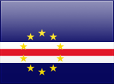 |
| History | |
| The uninhabited islands were discovered and colonized by the Portuguese in the 15th century; Cabo Verde subsequently became a trading center for African slaves and later an important coaling and resupply stop for whaling and transatlantic shipping. The fusing of European and various African cultural traditions is reflected in Cabo Verde’s Krioulo language, music, and pano textiles. Following independence in 1975, and a tentative interest in unification with Guinea-Bissau, a one-party system was established and maintained until multi-party elections were held in 1990. Cabo Verde continues to sustain one of Africa's most stable democratic governments and one of its most stable economies, maintaining a currency formerly pegged to the Portuguese escudo and then the euro since 1998. Repeated droughts during the second half of the 20th century caused significant hardship and prompted heavy emigration. As a result, Cabo Verde's expatriate population - concentrated in Boston and Western Europe - is greater than its domestic one. Most Cabo Verdeans have both African and Portuguese antecedents. Cabo Verde’s population descends from its first permanent inhabitants in the late 15th-century – a preponderance of West African slaves, a small share of Portuguese colonists, and even fewer Italians, Spaniards, and Portuguese Jews. Among the nine inhabited islands, population distribution is variable. Islands in the east are very dry and are home to the country's growing tourism industry. The more western islands receive more precipitation and support larger populations, but agriculture and livestock grazing have damaged their soil fertility and vegetation. For centuries, the country’s overall population size has fluctuated significantly, as recurring periods of famine and epidemics have caused high death tolls and emigration. |

|  |
| |
| Geography | |
| |
| Location: | Western Africa, group of islands in the North Atlantic Ocean, west of Senegal |
| Geographic coordinates: | 16 00 N, 24 00 W |
| Area: | total: 4,033 sq km land: 4,033 sq km water: 0 sq km Size comparison: slightly larger than Rhode Island |
| Land Boundaries: | 0 km |
| Coastline: | 965 km |
| Maritime claims: | territorial sea: 12 nm exclusive economic zone: 200 nm contiguous zone: 24 nm measured from claimed archipelagic baselines |
| Climate: | temperate; warm, dry summer; precipitation meager and erratic |
| Terrain: | steep, rugged, rocky, volcanic |
| Natural resources: | salt, basalt rock, limestone, kaolin, fish, clay, gypsum |
| Land use: | agricultural land: 18.6% (2011 est.) arable land: 11.7% (2011 est.) permanent crops: 0.7% (2011 est.) permanent pasture: 6.2% (2011 est.) forest: 21% (2011 est.) other: 60.4% (2011 est.) |
| Irrigated land: | 35 sq km (2012) |
| Natural hazards: | prolonged droughts; seasonal harmattan wind produces obscuring dust; volcanically and seismically active volcanism: Fogo (2,829 m), which last erupted in 1995, is Cabo Verde's only active volcano |
| Current Environment Issues: | deforestation due to demand for firewood; water shortages; prolonged droughts and improper use of land (overgrazing, crop cultivation on hillsides lead to desertification and erosion); environmental damage has threatened several species of birds and reptiles; illegal beach sand extraction; overfishing |
| International Environment Agreements: | party to: Biodiversity, Climate Change, Climate Change-Kyoto Protocol, Desertification, Endangered Species, Environmental Modification, Hazardous Wastes, Law of the Sea, Marine Dumping, Ozone Layer Protection, Ship Pollution, Wetlands signed, but not ratified: none of the selected agreements |
| ^Back to Top | |
| People | |
| |
| Nationality: | noun: Cabo Verdean(s) adjective: Cabo Verdean |
| Ethnic groups: | Creole (mulatto) 71%, African 28%, European 1% |
| Languages: | Portuguese (official), Krioulo (a blend of Portuguese and West African languages) |
| Religions: | Roman Catholic 77.3%, Protestant 4.6% (includes Church of the Nazarene 1.7%, Adventist 1.5%, Assembly of God 0.9%, Universal Kingdom of God 0.4%, and God and Love 0.1%), other Christian 3.4% (includes Christian Rationalism 1.9%, Jehovah's Witness 1%, and New Apostolic 0.5%), Muslim 1.8%, other 1.3%, none 10.8%, unspecified 0.7% (2010 est.) |
| Population: | 568,373 (July 2018 est.) |
| Age structure: | 0-14 years: 28.7% (male 82,035 /female 81,082) 15-24 years: 19.64% (male 55,811 /female 55,798) 25-54 years: 40.02% (male 110,646 /female 116,804) 55-64 years: 6.4% (male 16,154 /female 20,245) 65 years and over: 5.24% (male 11,272 /female 18,526) (2018 est.) |
| Dependency ratios: | total dependency ratio: 55.4 (2015 est.) youth dependency ratio: 48.4 (2015 est.) elderly dependency ratio: 6.9 (2015 est.) potential support ratio: 14.4 (2015 est.) |
| Median age: | total: 25.8 years male: 25 years female: 26.7 years (2018 est.) |
| Population growth rate: | 1.32% (2018 est.) |
| Birth rate: | 19.7 births/1,000 population (2018 est.) |
| Death rate: | 6 deaths/1,000 population (2018 est.) |
| Net migration rate: | -0.6 migrant(s)/1,000 population (2018 est.) |
| Urbanization: | urban population: 65.7% of total population (2018) rate of urbanization: 1.97% annual rate of change (2015-20 est.) |
| Major urban areas - population: | 168,000 PRAIA (capital) (2018) |
| Sex ratio: | at birth: 1.03 male(s)/female 0-14 years: 1.01 male(s)/female 15-24 years: 1 male(s)/female 25-54 years: 0.95 male(s)/female 55-64 years: 0.8 male(s)/female 65 years and over: 0.61 male(s)/female total population: 0.94 male(s)/female (2018 est.) |
| Maternal mortality rate: | 42 deaths/100,000 live births (2015 est.) |
| Infant mortality rate: | total: 21.1 deaths/1,000 live births male: 24.3 deaths/1,000 live births female: 17.9 deaths/1,000 live births (2018 est.) |
| Life expectancy at birth: | total population: 72.7 years male: 70.3 years female: 75.1 years (2018 est.) |
| Total fertility rate: | 2.21 children born/woman (2018 est.) |
| Physicians density: | 0.77 physicians/1,000 population (2015) |
| Hospital bed density: | 2.1 beds/1,000 population (2010) |
| Drinking water source: | improved: urban: 94% of population rural: 87.3% of population total: 91.7% of population unimproved: urban: 6% of population rural: 12.7% of population total: 8.3% of population (2015 est.) |
| Sanitation facility access: | improved: urban: 81.6% of population (2015 est.) rural: 54.3% of population (2015 est.) total: 72.2% of population (2015 est.) unimproved: urban: 1.4% of population (2015 est.) rural: 45.7% of population (2015 est.) total: 27.8% of population (2015 est.) |
| HIV/AIDS - adult prevalence rate: | 0.6% (2017 est.) |
| HIV/AIDS - people living with HIV/AIDS: | 2,400 (2017 est.) |
| HIV/AIDS - deaths: | <100 (2017 est.) |
| Obesity - adult prevalence rate: | 11.8% (2016) |
| Education expenditures: | 5.2% of GDP (2017) |
| Literacy: | definition: age 15 and over can read and write (2015 est.) total population: 86.8% male: 91.7% female: 82% (2015 est.) |
| School life expectancy (primary to tertiary education): | total: 12 years male: 12 years female: 12 years (2017) Unemployment, youth ages 15-24: total: 32.5% male: 29.5% female: 36.4% (2017) |
| ^Back to Top | |
| Government | |
| |
| Country name: | conventional long form: Republic of Cabo Verde conventional short form: Cabo Verde local long form: Republica de Cabo Verde local short form: Cabo Verde etymology: the name derives from Cap-Vert (Green Cape) on the Senegalese coast, the westernmost point of Africa and the nearest mainland to the islands |
| Government type: | parliamentary republic |
| Capital: | name: Praia geographic coordinates: 14 55 N, 23 31 W time difference: UTC-1 (4 hours ahead of Washington, DC, during Standard Time) etymology: the earlier Portuguese name was Villa de Praia ("Village of the Beach"); it became just Praia in 1974 (prior to full independence in 1975) |
| Administrative divisions: | 22 municipalities (concelhos, singular - concelho); Boa Vista, Brava, Maio, Mosteiros, Paul, Porto Novo, Praia, Ribeira Brava, Ribeira Grande, Ribeira Grande de Santiago, Sal, Santa Catarina, Santa Catarina do Fogo, Santa Cruz, Sao Domingos, Sao Filipe, Sao Lourenco dos Orgaos, Sao Miguel, Sao Salvador do Mundo, Sao Vicente, Tarrafal, Tarrafal de Sao Nicolau |
| Independence: | 5 July 1975 (from Portugal) |
| National holiday: | Independence Day, 5 July (1975) |
| Constitution: | history: previous 1981; latest effective 25 September 1992 amendments: proposals require support of at least four-fifths of the active National Assembly membership; amendment drafts require sponsorship of at least one-third of the active Assembly membership; passage requires at least two-thirds majority vote by the Assembly membership; constitutional sections including those on national independence, form of government, political pluralism, suffrage, and human rights and liberties cannot be amended; revised 1995, 1999, 2010 (2017) |
| Legal system: | civil law system of Portugal |
| Suffrage: | 18 years of age; universal |
| Executive branch: | chief of state: President Jorge Carlos FONSECA (since 9 September 2011) head of government: Prime Minister Ulisses CORREIA E. SILVA (since 22 April 2016) cabinet: Council of Ministers appointed by the president on the recommendation of the prime minister elections/appointments: president directly elected by absolute majority popular vote in 2 rounds if needed for a 5-year term (eligible for a second term); election last held on 2 October 2016 (next to be held in 2021); prime minister nominated by the National Assembly and appointed by the president election results: Jorge Carlos FONSECA reelected president; percent of vote - Jorge Carlos FONSECA (MPD) 74%, Albertino GRACA (independent) 23%, other 3% |
| Legislative branch: | description: unicameral National Assembly or Assembleia Nacional (72 seats; members directly elected in multi-seat constituencies by proportional representation vote; members serve 5-year terms) elections: last held on 20 March 2016 (next to be held in 2021) election results: percent of vote by party MPD 54.5%, PAICV 38.2%, UCID 7%, other 0.3%; seats by party - MPD 40, PAICV 29, UCID 3; composition - men 57, women 15, percent of women 20.8% |
| Judicial branch: | highest courts: Supreme Court of Justice (consists of the chief justice and at least 7 judges and organized into civil, criminal, and administrative sections) judge selection and term of office: judge appointments - 1 by the president of the republic, 1 elected by the National Assembly, and 3 by the Superior Judicial Council (SJC), a 16-member independent body chaired by the chief justice and includes the attorney general, 8 private citizens, 2 judges, 2 prosecutors, the senior legal inspector of the Attorney General's office, and a representative of the Ministry of Justice; chief justice appointed by the president of the republic from among peers of the Supreme Court of Justice and in consultation with the SJC; judges appointed for life subordinate courts: appeals courts, first instance (municipal) courts; audit, military, and fiscal and customs courts |
| Political parties and leaders: | rz African Party for Independence of Cabo Verde or PAICV [Janira Hopffer ALMADA] Democratic and Independent Cabo Verdean Union or UCID [Antonio MONTEIRO] Democratic Christian Party or PDC [Manuel RODRIGUES] Democratic Renovation Party or PRD [Victor FIDALGO] Movement for Democracy or MPD [Ulisses CORREIA E SILVA] Party for Democratic Convergence or PCD [Dr. Eurico MONTEIRO] Party of Work and Solidarity or PTS [Anibal MEDINA] Social Democratic Party or PSD [Joao ALEM] |
| International organization participation: | ACP, AfDB, AOSIS, AU, CD, CPLP, ECOWAS, FAO, G-77, IAEA, IBRD, ICAO, ICCt (signatory), ICRM, IDA, IFAD, IFC, IFRCS, ILO, IMF, IMO, Interpol, IOC, IOM, IPU, ITSO, ITU, ITUC (NGOs), MIGA, NAM, OIF, OPCW, UN, UNCTAD, UNESCO, UNIDO, Union Latina, UNWTO, UPU, WCO, WHO, WIPO, WMO, WTO |
| National symbol(s): | ten, five-pointed, yellow stars; national colors: blue, white, red, yellow |
| National anthem: | name: "Cantico da Liberdade" (Song of Freedom) lyrics/music: Amilcar Spencer LOPES/Adalberto Higino Tavares SILVA note: adopted 1996 |
| Diplomatic representation in the US: | chief of mission: Ambassador Carlos W. VEIGA (since 18 January 2017) chancery: 3415 Massachusetts Avenue NW, Washington, DC 20007 telephone: [1] (202) 965-6820 FAX: [1] (202) 965-1207 consulate(s) general: Boston |
| Diplomatic representation from the US: | chief of mission: Ambassador (vacant); Charge d'Affaires Marissa SCOTT (since September 2018) embassy: Rua Abilio Macedo 6, Praia mailing address: C. P. 201, Praia telephone: [238] 260-89-00 FAX: [238] 261-13-55 |
| ^Back to Top | |
| Economy | |
Cabo Verde’s economy depends on development aid, foreign investment, remittances, and tourism. The economy is service-oriented with commerce, transport, tourism, and public services accounting for about three-fourths of GDP. Tourism is the mainstay of the economy and depends on conditions in the euro-zone countries. Cabo Verde annually runs a high trade deficit financed by foreign aid and remittances from its large pool of emigrants; remittances as a share of GDP are one of the highest in Sub-Saharan Africa. Although about 40% of the population lives in rural areas, the share of food production in GDP is low. The island economy suffers from a poor natural resource base, including serious water shortages, exacerbated by cycles of long-term drought, and poor soil for growing food on several of the islands, requiring it to import most of what it consumes. The fishing potential, mostly lobster and tuna, is not fully exploited. Economic reforms are aimed at developing the private sector and attracting foreign investment to diversify the economy and mitigate high unemployment. The government’s elevated debt levels have limited its capacity to finance any shortfalls. | |
| GDP (purchasing power parity): | $3.777 billion (2017 est.) $3.631 billion (2016 est.) $3.468 billion (2015 est.) note: data are in 2017 dollars |
| GDP (official exchange rate): | $1.776 billion (2017 est.) |
| GDP - real growth rate: | 4% (2017 est.) 4.7% (2016 est.) 1% (2015 est.) |
| GDP - per capita (PPP): | $7,000 (2017 est.) $6,800 (2016 est.) $6,600 (2015 est.) note: data are in 2017 dollars |
| Gross national saving: | 32.4% of GDP (2017 est.) 34.8% of GDP (2016 est.) 35.6% of GDP (2015 est.) GDP - composition, by end use: household consumption: 50.1% (2017 est.) government consumption: 18.3% (2017 est.) investment in fixed capital: 32.2% (2017 est.) investment in inventories: 1.9% (2017 est.) exports of goods and services: 48.6% (2017 est.) imports of goods and services: -51.1% (2017 est.) GDP - composition, by sector of origin: agriculture: 8.9% (2017 est.) industry: 17.5% (2017 est.) services: 73.7% (2017 est.) |
| Agriculture - products: | bananas, corn, beans, sweet potatoes, sugarcane, coffee, peanuts; fish |
| Industries: | food and beverages, fish processing, shoes and garments, salt mining, ship repair |
| Industrial production growth rate: | 2.9% (2017 est.) |
| Labor force: | 196,100 (2007 est.) |
| Unemployment rate: | 9% (2017 est.) 9% (2016 est.) |
| Population below poverty line: | 30% (2000 est.) |
| Household income or consumption by percentage share: | lowest 10%: 1.9% highest 10%: 40.6% (2000) |
| Budget: | revenues: 493.5 million (2017 est.) expenditures: 546.7 million (2017 est.) |
| Taxes and other revenues: | 27.8% (of GDP) (2017 est.) Budget surplus (+) or deficit (-): -3% (of GDP) (2017 est.) |
| Public debt: | 125.8% of GDP (2017 est.) 127.6% of GDP (2016 est.) |
| Fiscal year: | calendar year |
| Inflation rate (consumer prices): | 0.8% (2017 est.) -1.4% (2016 est.) |
| Current account balance: | -$109 million (2017 est.) -$40 million (2016 est.) |
| Exports: | $189 million (2017 est.) $148.4 million (2016 est.) |
| Exports - commodities: | fuel (re-exports), shoes, garments, fish, hides |
| Exports - partners: | Spain 45.3%, Portugal 40.3%, Netherlands 8.1% (2017) |
| Imports: | $836.1 million (2017 est.) $687.3 million (2016 est.) |
| Imports - commodities: | foodstuffs, industrial products, transport equipment, fuels |
| Imports - partners: | Portugal 43.9%, Spain 11.6%, Netherlands 6.1%, China 6.1% (2017) |
| Reserves of foreign exchange and gold: | $617.4 million (31 December 2017 est.) $572.7 million (31 December 2016 est.) |
| Debt - external: | $1.713 billion (31 December 2017 est.) $1.688 billion (31 December 2016 est.) |
| Stock of direct foreign investment - at home: | $2.088 billion (31 December 2017 est.) $1.735 billion (31 December 2016 est.) |
| Stock of direct foreign investment - abroad: | $64.6 million (31 December 2017 est.) $39.9 million (31 December 2016 est.) |
| Exchange rates: | Cabo Verdean escudos (CVE) per US dollar - 101.8 (2017 est.) 99.688 (2016 est.) 99.688 (2015 est.) 99.426 (2014 est.) 83.114 (2013 est.) |
| ^Back to Top | |
| Energy | |
| |
| Electricity - production: | 395 million kWh (2016 est.) |
| Electricity - consumption: | 367.4 million kWh (2016 est.) |
| Electricity - exports: | 0 kWh (2016 est.) |
| Electricity - imports: | 0 kWh (2016 est.) |
| Electricity - installed generating capacity: | 162,500 kW (2016 est.) |
| Electricity - from fossil fuels: | 79% of total installed capacity (2016 est.) |
| Electricity - from nuclear fuels: | 0% of total installed capacity (2017 est.) |
| Electricity - from hydroelectric plants: | 0% of total installed capacity (2017 est.) |
| Electricity - from other renewable sources: | 21% of total installed capacity (2017 est.) |
| Crude oil - production: | 0 bbl/day (2017 est.) |
| Crude oil - exports: | 0 bbl/day (2015 est.) |
| Crude oil - imports: | 0 bbl/day (2015 est.) |
| Crude oil - proved reserves: | 0 bbl (1 January 2018 est.) |
| Refined petroleum products - production: | 0 bbl/day (2015 est.) |
| Refined petroleum products - consumption: | 5,600 bbl/day (2016 est.) |
| Refined petroleum products - exports: | 0 bbl/day (2015 est.) |
| Refined petroleum products - imports: | 5,607 bbl/day (2015 est.) |
| Natural gas - production: | 0 cu m (2017 est.) |
| Natural gas - consumption: | 0 cu m (2017 est.) |
| Natural gas - exports: | 0 cu m (2017 est.) |
| Natural gas - imports: | 0 cu m (2017 est.) |
| Natural gas - proved reserves: | 0 cu m (1 January 2016 est.) |
| Carbon dioxide emissions from consumption of energy: | 867,800 Mt (2017 est.) |
| ^Back to Top | |
| Communications | |
| |
| Cellular Phones in use: | total subscriptions: 612,259 subscriptions per 100 inhabitants: 109 (2017 est.) |
| Telephone system: | general assessment: good system, extensive modernization from 1996-2000 following partial privatization in 1995; major service provider is Cabo Verde Telecom (CVT) (2018) domestic: 12 per 100 fixed-line and 109 per 100 mobile-cellular; fiber-optic ring, completed in 2001, links all islands providing Internet access and ISDN services; cellular service introduced in 1998; broadband services launched early in the decade; moving to 4G in mid-2019 (2018) international: country code - 238; landing point for the Atlantis-2 fiber-optic transatlantic telephone cable that provides links to South America, Senegal, and Europe; HF radiotelephone to Senegal and Guinea-Bissau; satellite earth station - 1 Intelsat (Atlantic Ocean); new agreement between CVT and private company and subsea fiber connectivity in 2020 will promote growth in Internet, cloud computing and 5G services to the region, reaching Europe and Latin America |
| Broadcast media: | state-run TV and radio broadcast network plus a growing number of private broadcasters; Portuguese public TV and radio services for Africa are available; transmissions of a few international broadcasters are available (2019) |
| Internet country code: | .cv |
| Internet users: | total: 266,562 percent of population: 48.2% (July 2016 est.) |
| ^Back to Top | |
| Transportation | |
| |
| Airports: | 9 (2013) |
| Airports (paved runways): | total 9 (2017) over 3,047 m: 1 (2017) 1,524 to 2,437 m: 3 (2017) 914 to 1,523 m: 3 (2017) under 914 m: 2 (2017) |
| Roadways: | total 1,350 km (2013) paved: 932 km (2013) unpaved: 418 km (2013) |
| Merchant marine: | total 43 by type: general cargo 20, oil tanker 3, other 20 (2018) |
| Ports and terminals: | major seaport(s): Porto Grande |
| ^Back to Top | |
| Military | |
| |
| Military branches: | Armed Forces: Army (also called the National Guard, GN), Cabo Verde Coast Guard (Guardia Costeira de Cabo Verde, GCCV, includes naval infantry) (2013) |
| Military service age and obligation: | 18-35 years of age for male and female selective compulsory military service; 2-years conscript service obligation; 17 years of age for voluntary service (with parental consent) (2013) |
| Military expenditures: | 0.63% of GDP (2016) 0.57% of GDP (2015) 0.54% of GDP (2014) 0.53% of GDP (2013) 0.56% of GDP (2012) |
| ^Back to Top | |
| Transnational Issues | |
| |
| Disputes - International: | none |
| Refugees and internally displaced persons: | stateless persons: 115 (2018) |
| Illicit drugs: | used as a transshipment point for Latin American cocaine destined for Western Europe, particularly because of Lusophone links to Brazil, Portugal, and Guinea-Bissau; has taken steps to deter drug money laundering, including a 2002 anti-money laundering reform that criminalizes laundering the proceeds of narcotics trafficking and other crimes and the establishment in 2008 of a Financial Intelligence Unit |
| ^Back to Top | |
«
Previous Country | Next Country » Back to Flag Counter OverviewSource: CIA - The World Factbook