
Barbados Population: 293,131
NO VISITORS FROM HERE YET!Back to Flag Counter Overview | 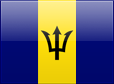 |
| History | |
| The island was uninhabited when first settled by the British in 1627. African slaves worked the sugar plantations established on the island, which initially dominated the Caribbean sugar industry. By 1720 Barbados was no longer a dominant force within the sugar industry, having been surpassed by the Leeward Islands and Jamaica. Slavery was abolished in 1834. The Barbadian economy remained heavily dependent on sugar, rum, and molasses production through most of the 20th century. The gradual introduction of social and political reforms in the 1940s and 1950s led to complete independence from the UK in 1966. In the 1990s, tourism and manufacturing surpassed the sugar industry in economic importance. |

|  |
| |
| Geography | |
| |
| Location: | Caribbean, island in the North Atlantic Ocean, northeast of Venezuela |
| Geographic coordinates: | 13 10 N, 59 32 W |
| Area: | total: 430 sq km land: 430 sq km water: 0 sq km Size comparison: 2.5 times the size of Washington, DC |
| Land Boundaries: | 0 km |
| Coastline: | 97 km |
| Maritime claims: | territorial sea: 12 nm exclusive economic zone: 200 nm |
| Climate: | tropical; rainy season (June to October) |
| Terrain: | relatively flat; rises gently to central highland region |
| Natural resources: | petroleum, fish, natural gas |
| Land use: | agricultural land: 32.6% (2016 est.) arable land: 25.6% (2016 est.) permanent crops: 2.3% (2016 est.) permanent pasture: 4.7% (2016 est.) forest: 19.4% (2016 est.) other: 48% (2016 est.) |
| Irrigated land: | 50 sq km (2012) |
| Natural hazards: | infrequent hurricanes; periodic landslides |
| Current Environment Issues: | pollution of coastal waters from waste disposal by ships; soil erosion; illegal solid waste disposal threatens contamination of aquifers |
| International Environment Agreements: | party to: Biodiversity, Climate Change, Climate Change-Kyoto Protocol, Desertification, Endangered Species, Hazardous Wastes, Law of the Sea, Marine Dumping, Ozone Layer Protection, Ship Pollution, Wetlands signed, but not ratified: none of the selected agreements |
| ^Back to Top | |
| People | |
| |
| Nationality: | noun: Barbadian(s) or Bajan (colloquial) adjective: Barbadian or Bajan (colloquial) |
| Ethnic groups: | African descent 92.4%, mixed 3.1%, white 2.7%, East Indian 1.3%, other 0.2%, unspecified 0.3% (2010 est.) |
| Languages: | English (official), Bajan (English-based creole language, widely spoken in informal settings) |
| Religions: | Protestant 66.4% (includes Anglican 23.9%, other Pentecostal 19.5%, Adventist 5.9%, Methodist 4.2%, Wesleyan 3.4%, Nazarene 3.2%, Church of God 2.4%, Baptist 1.8%, Moravian 1.2%, other Protestant 0.9%), Roman Catholic 3.8%, other Christian 5.4% (includes Jehovah's Witness 2.0%, other 3.4%), Rastafarian 1%, other 1.5%, none 20.6%, unspecified 1.2% (2010 est.) |
| Population: | 293,131 (July 2018 est.) |
| Age structure: | 0-14 years: 17.8% (male 26,084 /female 26,090) 15-24 years: 12.53% (male 18,236 /female 18,479) 25-54 years: 43.69% (male 63,829 /female 64,249) 55-64 years: 13.62% (male 18,888 /female 21,043) 65 years and over: 12.36% (male 14,705 /female 21,528) (2018 est.) |
| Dependency ratios: | total dependency ratio: 50.4 (2015 est.) youth dependency ratio: 29.1 (2015 est.) elderly dependency ratio: 21.3 (2015 est.) potential support ratio: 4.7 (2015 est.) |
| Median age: | total: 38.9 years male: 37.8 years female: 40.1 years (2018 est.) |
| Population growth rate: | 0.26% (2018 est.) |
| Birth rate: | 11.6 births/1,000 population (2018 est.) |
| Death rate: | 8.6 deaths/1,000 population (2018 est.) |
| Net migration rate: | -0.3 migrant(s)/1,000 population (2018 est.) |
| Urbanization: | urban population: 31.1% of total population (2018) rate of urbanization: 0.2% annual rate of change (2015-20 est.) |
| Major urban areas - population: | 89,000 BRIDGETOWN (capital) (2018) |
| Sex ratio: | at birth: 1.01 male(s)/female 0-14 years: 1 male(s)/female 15-24 years: 0.99 male(s)/female 25-54 years: 0.99 male(s)/female 55-64 years: 0.9 male(s)/female 65 years and over: 0.68 male(s)/female total population: 0.94 male(s)/female (2018 est.) |
| Maternal mortality rate: | 27 deaths/100,000 live births (2015 est.) |
| Infant mortality rate: | total: 10 deaths/1,000 live births male: 11.1 deaths/1,000 live births female: 8.9 deaths/1,000 live births (2018 est.) |
| Life expectancy at birth: | total population: 75.7 years male: 73.3 years female: 78.1 years (2018 est.) |
| Total fertility rate: | 1.68 children born/woman (2018 est.) |
| Contraceptive prevalence rate: | 59.2% (2012) |
| Physicians density: | 2.49 physicians/1,000 population (2017) |
| Hospital bed density: | 5.8 beds/1,000 population (2014) |
| Drinking water source: | improved: urban: 99.7% of population rural: 99.7% of population total: 99.7% of population unimproved: urban: 0.3% of population rural: 0.3% of population total: 0.3% of population (2015 est.) |
| Sanitation facility access: | improved: urban: 96.2% of population (2015 est.) rural: 96.2% of population (2015 est.) total: 96.2% of population (2015 est.) unimproved: urban: 3.8% of population (2015 est.) rural: 3.8% of population (2015 est.) total: 3.8% of population (2015 est.) |
| HIV/AIDS - adult prevalence rate: | 1.6% (2017 est.) |
| HIV/AIDS - people living with HIV/AIDS: | 2,700 (2017 est.) |
| HIV/AIDS - deaths: | <100 (2017 est.) |
| Obesity - adult prevalence rate: | 23.1% (2016) |
| Children under the age of 5 years underweight: | 3.5% (2012) |
| Education expenditures: | 4.7% of GDP (2017) |
| Literacy: | definition: age 15 and over can read and write (2014 est.) total population: 99.6% male: 99% female: 99.6% (2014) |
| School life expectancy (primary to tertiary education): | total: 15 years male: 14 years female: 17 years (2011) Unemployment, youth ages 15-24: total: 29.6% male: 27.9% female: 31.5% (2016 est.) |
| ^Back to Top | |
| Government | |
| |
| Country name: | conventional long form: none conventional short form: Barbados etymology: the name derives from the Portuguese "as barbadas," which means "the bearded ones" and can refer either to the long, hanging roots of the island's bearded fig trees or to the alleged beards of the native Carib inhabitants |
| Government type: | parliamentary democracy (Parliament) under a constitutional monarchy; a Commonwealth realm |
| Capital: | name: Bridgetown geographic coordinates: 13 06 N, 59 37 W time difference: UTC-4 (1 hour ahead of Washington, DC, during Standard Time) etymology: named after a bridge constructed over the swampy area (known as the Careenage) around the Constitution River that flows through the center of Bridgetown |
| Administrative divisions: | 11 parishes and 1 city*; Bridgetown*, Christ Church, Saint Andrew, Saint George, Saint James, Saint John, Saint Joseph, Saint Lucy, Saint Michael, Saint Peter, Saint Philip, Saint Thomas |
| Independence: | 30 November 1966 (from the UK) |
| National holiday: | Independence Day, 30 November (1966) |
| Constitution: | history: adopted 22 November 1966, effective 30 November 1966 amendments: proposed by Parliament; passage of amendments to constitutional sections such as citizenship, fundamental rights and freedoms, and the organization and authorities of the branches of government requires two-thirds majority vote by the membership of both houses of Parliament; passage of other amendments only requires a majority vote of both houses; amended several times, last in 2010 (2018) |
| Legal system: | English common law; no judicial review of legislative acts |
| Suffrage: | 18 years of age; universal |
| Executive branch: | chief of state: Queen ELIZABETH II (since 6 February 1952); represented by Governor General Sandra MASON (since 8 January 2018) head of government: Prime Minister Mia MOTTLEY (since 25 May 2018) cabinet: Cabinet appointed by the governor general on the advice of the prime minister elections/appointments: the monarchy is hereditary; governor general appointed by the monarch; following legislative elections, the leader of the majority party or leader of the majority coalition usually appointed prime minister by the governor general; the prime minister recommends the deputy prime minister |
| Legislative branch: | description: bicameral Parliament consists of: Senate (21 seats; members appointed by the governor general - 12 on the advice of the Prime Minister, 2 on the advice of the opposition leader, and 7 at the discretion of the governor general) House of Assembly (30 seats; members directly elected in single-seat constituencies by simple majority vote to serve 5-year terms) elections: Senate - last appointments on 5 June 2018 (next appointments NA) House of Assembly - last held on 24 May 2018 (next to be held in 2023) election results: Senate - appointed; composition - men 16, women 5, percent of women 23.8% House of Assembly - percent of vote by party - BLP 74.6%, DLP 22.6%, other 2.8%; seats by party - BLP 30; composition - men 24, women 6, percent of women 20%; note - total Parliament percent of women 21.6% note: tradition dictates that the election is held within 5 years of the last election, but constitutionally it is 5 years from the first seating of Parliament plus a 90-day grace period |
| Judicial branch: | highest courts: Supreme Court (consists of the High Court with 8 justices) and the Court of Appeal (consists of the High Court chief justice and president of the court and 4 justices; note - in 2005, Barbados acceded to the Caribbean Court of Justice as the final court of appeal, replacing that of the Judicial Committee of the Privy Council in London judge selection and term of office: Supreme Court chief justice appointed by the governor-general on the recommendation of the prime minister and opposition leader of Parliament; other justices appointed by the governor-general on the recommendation of the Judicial and Legal Service Commission, a 5-member independent body consisting of the Supreme Court chief justice, the commission head, and governor-general appointees recommended by the prime minister; justices serve until mandatory retirement at age 65 subordinate courts: Magistrates' Courts |
| Political parties and leaders: | Bajan Free Party [Alex MITCHELL] Barbados Integrity Movement [Neil HOLDER] Barbados Labor Party or BLP [Mia MOTTLEY] Democratic Labor Party or DLP [Freundel STUART] People’s Democratic Congress [Mark ADAMSON] People's Empowerment Party or PEP [David COMISSIONG] Solutions Barbados [Grenville PHILLIPS II] United Progressive Party or UPP [Lynette EASTMOND] |
| International organization participation: | ACP, AOSIS, C, Caricom, CDB, CELAC, FAO, G-77, IADB, IBRD, ICAO, ICCt, ICRM, IDA, IFAD, IFC, IFRCS, ILO, IMF, IMO, Interpol, IOC, ISO, ITSO, ITU, ITUC (NGOs), LAES, MIGA, NAM, OAS, OPANAL, OPCW, UN, UNCTAD, UNESCO, UNHCR, UNIDO, UPU, WCO, WFTU (NGOs), WHO, WIPO, WMO, WTO |
| National symbol(s): | Neptune's trident, pelican, Red Bird of Paradise flower (also known as Pride of Barbados); national colors: blue, yellow, black |
| National anthem: | name: The National Anthem of Barbados lyrics/music: Irving BURGIE/C. Van Roland EDWARDS note: adopted 1966; the anthem is also known as "In Plenty and In Time of Need" |
| Diplomatic representation in the US: | chief of mission: Ambassador Selwin Charles HART (since 18 January 2017) chancery: 2144 Wyoming Avenue NW, Washington, DC 20008 telephone: [1] (202) 939-9200 FAX: [1] (202) 332-7467 consulate(s) general: Miami, New York |
| Diplomatic representation from the US: | chief of mission: Ambassador Linda S. TAGLIALATELA (since 1 February 2016) note - also accredited to Antigua and Barbuda, Dominica, Grenada, Saint Kitts and Nevis, Saint Lucia, and Saint Vincent and the Grenadines embassy: Wildey Business Park, Wildey, St. Michael BB 14006, Barbados, W.I. mailing address: P. O. Box 302, Bridgetown BB 11000; (Department Name) Unit 3120, DPO AA 34055 telephone: [1] (246) 227-4000 FAX: [1] (246) 431-0179 |
| ^Back to Top | |
| Economy | |
Barbados is the wealthiest and one of the most developed countries in the Eastern Caribbean and enjoys one of the highest per capita incomes in the region. Historically, the Barbadian economy was dependent on sugarcane cultivation and related activities. However, in recent years the economy has diversified into light industry and tourism. Offshore finance and information services are important foreign exchange earners, boosted by being in the same time zone as eastern US financial centers and by a relatively highly educated workforce. Following the 2008-09 recession, external vulnerabilities such as fluctuations in international oil prices have hurt economic growth, raised Barbados' already high public debt to GDP ratio - which stood at 105% of GDP in 2016 - and cut into its international reserves. | |
| GDP (purchasing power parity): | $5.218 billion (2017 est.) $5.227 billion (2016 est.) $5.111 billion (2015 est.) note: data are in 2017 dollars |
| GDP (official exchange rate): | $4.99 billion (2017 est.) |
| GDP - real growth rate: | -0.2% (2017 est.) 2.3% (2016 est.) 2.2% (2015 est.) |
| GDP - per capita (PPP): | $18,600 (2017 est.) $18,700 (2016 est.) $18,300 (2015 est.) note: data are in 2017 dollars |
| Gross national saving: | 7.2% of GDP (2017 est.) 11.8% of GDP (2016 est.) 10.8% of GDP (2015 est.) GDP - composition, by end use: household consumption: 84.2% (2017 est.) government consumption: 13.4% (2017 est.) investment in fixed capital: 17.6% (2017 est.) investment in inventories: 0.2% (2017 est.) exports of goods and services: 31.6% (2017 est.) imports of goods and services: -47% (2017 est.) GDP - composition, by sector of origin: agriculture: 1.5% (2017 est.) industry: 9.8% (2017 est.) services: 88.7% (2017 est.) |
| Agriculture - products: | sugarcane, vegetables, cotton |
| Industries: | tourism, sugar, light manufacturing, component assembly for export |
| Industrial production growth rate: | 2.4% (2017 est.) |
| Labor force: | 144,000 (2017 est.) |
| Labor force - by occupation: | agriculture: 10% industry: 15% services: 75% (1996 est.) |
| Unemployment rate: | 10.1% (2017 est.) 9.9% (2016 est.) |
| Population below poverty line: | n/a |
| Household income or consumption by percentage share: | lowest 10%: n/a highest 10%: n/a |
| Budget: | revenues: 1.466 billion (2013 est.) (2017 est.) expenditures: 1.664 billion (2017 est.) |
| Taxes and other revenues: | 29.4% (of GDP) (2017 est.) Budget surplus (+) or deficit (-): -4% (of GDP) (2017 est.) |
| Public debt: | 157.3% of GDP (2017 est.) 149.1% of GDP (2016 est.) |
| Fiscal year: | 1 April - 31 March |
| Inflation rate (consumer prices): | 4.4% (2017 est.) 1.5% (2016 est.) |
| Current account balance: | -$189 million (2017 est.) -$206 million (2016 est.) |
| Exports: | $485.4 million (2017 est.) $516.9 million (2016 est.) |
| Exports - commodities: | manufactures, sugar, molasses, rum, other foodstuffs and beverages, chemicals, electrical components |
| Exports - partners: | US 38%, Trinidad and Tobago 10.2%, Guyana 5.5%, Jamaica 5%, China 4.8%, St. Lucia 4.6% (2017) |
| Imports: | $1.52 billion (2017 est.) $1.541 billion (2016 est.) |
| Imports - commodities: | consumer goods, machinery, foodstuffs, construction materials, chemicals, fuel, electrical components |
| Imports - partners: | US 38.5%, Trinidad and Tobago 14.6%, China 7.1%, UK 4.7% (2017) |
| Reserves of foreign exchange and gold: | $264.5 million (31 December 2017 est.) $341.8 million (31 December 2016 est.) |
| Debt - external: | $4.49 billion (2010 est.) $668 million (2003 est.) |
| Market value of publicly traded shares: | $4.495 billion (31 December 2012 est.) $4.571 billion (31 December 2011 est.) $4.366 billion (31 December 2010 est.) |
| Exchange rates: | Barbadian dollars (BBD) per US dollar - 2 (2017 est.) 2 (2016 est.) 2 (2015 est.) 2 (2014 est.) 2 (2013 est.) note: the Barbadian dollar is pegged to the US dollar |
| ^Back to Top | |
| Energy | |
| |
| Electricity - production: | 1.01 billion kWh (2016 est.) |
| Electricity - consumption: | 990 million kWh (2016 est.) |
| Electricity - exports: | 0 kWh (2017 est.) |
| Electricity - imports: | 0 kWh (2016 est.) |
| Electricity - installed generating capacity: | 269,000 kW (2016 est.) |
| Electricity - from fossil fuels: | 93% of total installed capacity (2016 est.) |
| Electricity - from nuclear fuels: | 0% of total installed capacity (2017 est.) |
| Electricity - from hydroelectric plants: | 0% of total installed capacity (2017 est.) |
| Electricity - from other renewable sources: | 7% of total installed capacity (2017 est.) |
| Crude oil - production: | 1,000 bbl/day (2017 est.) |
| Crude oil - exports: | 674 bbl/day (2015 est.) |
| Crude oil - imports: | 0 bbl/day (2015 est.) |
| Crude oil - proved reserves: | 2.534 million bbl (1 January 2018 est.) |
| Refined petroleum products - production: | 0 bbl/day (2015 est.) |
| Refined petroleum products - consumption: | 11,000 bbl/day (2016 est.) |
| Refined petroleum products - exports: | 0 bbl/day (2015 est.) |
| Refined petroleum products - imports: | 10,630 bbl/day (2015 est.) |
| Natural gas - production: | 14.16 million cu m (2017 est.) |
| Natural gas - consumption: | 19.82 million cu m (2017 est.) |
| Natural gas - exports: | 0 cu m (2017 est.) |
| Natural gas - imports: | 5.653 million cu m (2017 est.) |
| Natural gas - proved reserves: | 141.6 million cu m (1 January 2018 est.) |
| Carbon dioxide emissions from consumption of energy: | 1.76 million Mt (2017 est.) |
| ^Back to Top | |
| Communications | |
| |
| Cellular Phones in use: | total subscriptions: 337,791 subscriptions per 100 inhabitants: 116 (2017 est.) |
| Telephone system: | general assessment: island-wide automatic telephone system; telecom sector across the Caribbean region remains one of the key growth areas; numerous competitors licensed, but small and localized (2018) domestic: fixed-line teledensity of roughly 48 per 100 persons; mobile-cellular telephone density about 116 per 100 persons (2018) international: country code - 1-246; landing points for the (ECFS) and Southern Caribbean Fiber submarine cable with links to 15 other islands in the eastern Caribbean extending from the British Virgin Islands to Trinidad and Puerto Ricco; satellite earth stations - 1 (Intelsat - Atlantic Ocean); tropospheric scatter to Trinidad and Saint Lucia |
| Broadcast media: | government-owned Caribbean Broadcasting Corporation (CBC) operates the lone terrestrial TV station; CBC also operates a multi-channel cable TV subscription service; roughly a dozen radio stations, consisting of a CBC-operated network operating alongside privately owned radio stations |
| Internet country code: | .bb |
| Internet users: | total: 231,883 percent of population: 79.5% (July 2016 est.) |
| ^Back to Top | |
| Transportation | |
| |
| Airports: | 1 (2013) |
| Airports (paved runways): | total 1 (2017) over 3,047 m: 1 (2017) |
| Pipelines: | 33 km gas, 64 km oil, 6 km refined products (2013) |
| Roadways: | total 1,700 km (2015) paved: 1,700 km (2015) |
| Merchant marine: | total 121 by type: bulk carrier 21, general cargo 82, other 18 (2018) |
| Ports and terminals: | major seaport(s): Bridgetown |
| ^Back to Top | |
| Military | |
| |
| The Royal Barbados Defense Force includes a land-based Troop Command and a small Coast Guard; the primary role of the land element is island defense against external aggression; the Command consists of a single, part-time battalion with a small regular cadre deployed throughout the island; the cadre increasingly supports the police in patrolling the coastline for smuggling and other illicit activities | |
| Military branches: | Royal Barbados Defense Force: Troops Command, Barbados Coast Guard (2011) |
| Military service age and obligation: | 18 years of age for voluntary military service, or earlier with parental consent; no conscription (2013) |
| ^Back to Top | |
| Transnational Issues | |
| |
| Disputes - International: | Barbados and Trinidad and Tobago abide by the April 2006 Permanent Court of Arbitration decision delimiting a maritime boundary and limiting catches of flying fish in Trinidad and Tobago's exclusive economic zone; joins other Caribbean states to counter Venezuela's claim that Aves Island sustains human habitation, a criterion under the UN Convention on the Law of the Sea, which permits Venezuela to extend its Economic Exclusion Zone/continental shelf over a large portion of the eastern Caribbean Sea |
| Illicit drugs: | one of many Caribbean transshipment points for narcotics bound for Europe and the US; offshore financial center |
| ^Back to Top | |
Back to Flag Counter Overview
Source: CIA - The World Factbook